Jordan Loewenstein, D.C. | La Jolla Chiropractor
Low Back
Pain Relief
San Diego
Evidence-based chiropractic care for disc herniation, SI joint dysfunction, sciatica, and postural low back pain — from a practice that actually diagnoses the root cause first.
Yes, chiropractic care helps most low back pain. It is recommended as a first-line treatment by the American College of Physicians, ahead of medication. Dr. Loewenstein diagnoses the specific cause (disc, facet, SI joint, or muscle) first, then treats it. Most acute cases improve within 4 to 6 visits; disc and chronic cases take longer.
Your Back Hurts.
We Find Out Why.
Low back pain is the leading cause of disability worldwide — and one of the most undertreated conditions in San Diego, where millions of people manage it with ibuprofen and hope it goes away. It usually doesn’t. Here’s what actually works.
Your back has been talking to you for a while. Maybe it started as stiffness after sitting at your desk all day in Sorrento Valley, or a twinge during your Saturday surf session that never fully went away. Maybe it’s that sciatic ache that shoots down your leg whenever you sit for more than 20 minutes. Whatever it is — you’re not making it up, and it’s not just “part of getting older.”
Low back pain is almost always a mechanical problem. Something is compressing, inflamed, restricted, or imbalanced. The single biggest reason it keeps coming back is that most people treat the symptom (pain) instead of the cause (the joint, disc, or muscle dysfunction behind it).
At our UTC San Diego clinic, Dr. Loewenstein conducts a thorough orthopedic and neurological evaluation on your first visit to identify the specific source of your pain — disc, facet, SI joint, piriformis, posture, or some combination. Treatment follows diagnosis. Not the other way around.
7 Sources of
Low Back Pain
Most low back pain has a specific, identifiable mechanical cause. Dr. Loewenstein’s evaluation narrows this down on visit one so treatment is targeted from day one.
Who We Actually See
in UTC
San Diego has a uniquely high-risk low back pain population. Here’s who walks through our door — and why.
| Patient Type | Where They’re Coming From | Primary LBP Pattern | What Triggers It |
|---|---|---|---|
Tech & Biotech Workers | UTC · Sorrento Valley · Torrey Pines | Postural / ergonomic | 8–12 hrs at a screen, remote work, no movement breaks |
UCSD Students & Researchers | University City · La Jolla | Postural / early disc | Study posture + gym + poor ergonomics |
Surfers | La Jolla · Pacific Beach · Del Mar | Lumbar extension / disc | Paddle posture, explosive pop-up mechanics |
Road & Peloton Cyclists | Carmel Valley · Del Mar · UTC | Flexion-driven disc / facet | Sustained hip flexion, poor bike fit |
I-5 / I-805 Commuters | Carmel Valley · Sorrento Valley | Postural / muscle strain | Prolonged seated driving, static hip flexion |
Active Adults 35–55 | All North City Areas | DDD / facet / muscle | Weekend warrior pattern, accumulated wear |
What Happens When
You Come In
Every visit is built around your specific diagnosis — not a generic protocol. Here’s what the process looks like.
Questions About
Low Back Pain
The questions patients ask before they book — answered directly.
Yes — and extensively so. Chiropractic spinal manipulation is recommended as a first-line, non-drug treatment for low back pain by the American College of Physicians, the Agency for Healthcare Research and Quality, and NICE guidelines. Multiple Cochrane reviews and JAMA studies confirm that spinal manipulation provides equivalent or superior short-term pain relief and functional improvement compared to medications and physical therapy for both acute and chronic low back pain.
Yes — for the vast majority of lumbar disc herniations. Flexion-distraction technique gently decompresses the affected disc and reduces nerve root pressure without high-force thrusting. A 2022 study published in BMJ Open found that patients receiving chiropractic care for lumbar disc herniation had a 31% lower likelihood of requiring discectomy surgery at two-year follow-up. Dr. Loewenstein evaluates imaging and neurological findings to confirm chiropractic is appropriate and to select the safest technique for your specific disc condition.
For acute mechanical low back pain, many patients experience meaningful improvement within 4–6 visits over 2–3 weeks. For chronic conditions like DDD, disc herniation, or recurrent facet syndrome, a typical initial care plan is 8–12 visits over 4–6 weeks, followed by reassessment. Dr. Loewenstein will give you an honest, individualized estimate at your first visit — not a vague open-ended plan.
Yes. Flexion-distraction technique is a gentle, low-force method that decompresses the disc without rotational or compressive forces. It is specifically designed for disc herniations and is safe even with significant disc involvement. Dr. Loewenstein will review your MRI or imaging before treatment and will not use high-velocity manipulation if there are active neurological deficits or other contraindications.
Your first visit includes a detailed health history and symptom intake, followed by a physical examination including posture analysis, spinal range of motion testing, orthopedic tests (straight-leg raise, Kemp’s test, FABER/FADIR for SI joint), and a neurological screen. Dr. Loewenstein explains findings in plain language and outlines a realistic treatment plan with goals and a timeline. In most cases, treatment begins at the first visit.
Compelling evidence suggests yes. The BMJ Open 2022 study showed a 31% reduction in discectomy rates at two-year follow-up. The ACP and Joint Commission recommend exhausting conservative care before considering surgical options for most non-emergency low back pain. The exception: true cauda equina syndrome or progressive neurological deficit requires urgent surgical evaluation.
Not necessarily. For most patients with mechanical low back pain, imaging is not required before beginning care. Clinical guidelines actually recommend against routine imaging for non-specific low back pain. Dr. Loewenstein conducts a thorough clinical examination to determine the likely cause of your pain. If findings suggest a condition warranting imaging (neurological deficits, suspected fracture, red flag symptoms), he’ll refer you for the appropriate studies.
Chiropractic care focuses on restoring normal spinal joint motion, reducing nerve irritation, and addressing the root mechanical cause — often providing faster initial pain relief. Physical therapy emphasizes building strength and stability to prevent recurrence. For most patients, the ideal approach integrates both. At our UTC San Diego clinic, every care plan includes both hands-on treatment and a home exercise component.
Yes. Sciatica most commonly results from lumbar disc herniation or piriformis syndrome — both respond well to chiropractic care. For disc-related sciatica, flexion-distraction reduces nuclear pressure on the affected nerve root. For piriformis syndrome, direct soft tissue release combined with hip rehabilitation is highly effective. Research supports chiropractic care as an effective conservative option with outcomes comparable to epidural steroid injections for many patients.
Yes. The goal isn’t to “reverse” degeneration — it’s to maintain segmental mobility, reduce compensatory joint stress, and keep you functional. Techniques like flexion-distraction and low-amplitude mobilization avoid excessive loading of degenerated segments while restoring joint play. Many patients with DDD find that consistent chiropractic care dramatically reduces their flare-up frequency.
Recurrent low back pain usually means the underlying cause was never fully addressed — only the symptom was managed until it quieted down. Common contributors include inadequate core stabilization, unresolved joint hypomobility, hip flexor tightness, poor ergonomics, and deconditioning. A complete course of chiropractic care addresses these root factors — not just spot treatment until pain resolves.
Yes, in most cases. Chiropractic is covered under most major medical plans in California — including Blue Shield, Aetna, Anthem Blue Cross, UnitedHealthcare, and most employer-sponsored PPO plans. Medicare covers chiropractic adjustments for spinal conditions. Our office verifies your specific benefits before your first visit so you know exactly what to expect.
A responsible chiropractor screens for red flags at every initial evaluation. The following symptoms require prompt medical evaluation:
These may indicate cauda equina syndrome, fracture, infection, or malignancy. Dr. Loewenstein screens for all of these at the initial visit and will refer appropriately if any are present.
Muscle strain: diffuse, bilateral aching worsened by movement — no neurological symptoms. Disc herniation: radiating leg pain following a nerve root distribution, worse sitting and bending forward. Facet syndrome: unilateral localized pain worsening with back extension — no leg symptoms below the knee. SI joint: one-sided buttock pain sharp with position transitions, no true neurological signs. Only a proper clinical exam confirms the source. Dr. Loewenstein’s evaluation uses orthopedic testing, motion assessment, and neurological screening to identify the source precisely.
In most cases, yes — with guidance. Staying active is generally beneficial for recovery; rest and avoidance typically prolong recovery. Disc herniation patients may need to modify heavy deadlifts and aggressive forward flexion in the early phase, while facet or muscle strain patients can usually continue training with modifications. The goal is to keep you moving and training while protecting injured tissue.
Evidence-based clinical guidelines from the ACP now recommend conservative care first — including chiropractic, heat, massage, and exercise — ahead of medication and before considering injections or surgery for most acute and chronic low back pain. Seeing a chiropractor early often produces faster recovery, reduced risk of chronicity, lower overall healthcare costs, and decreased likelihood of needing stronger interventions later.
One doctor.
Every visit.
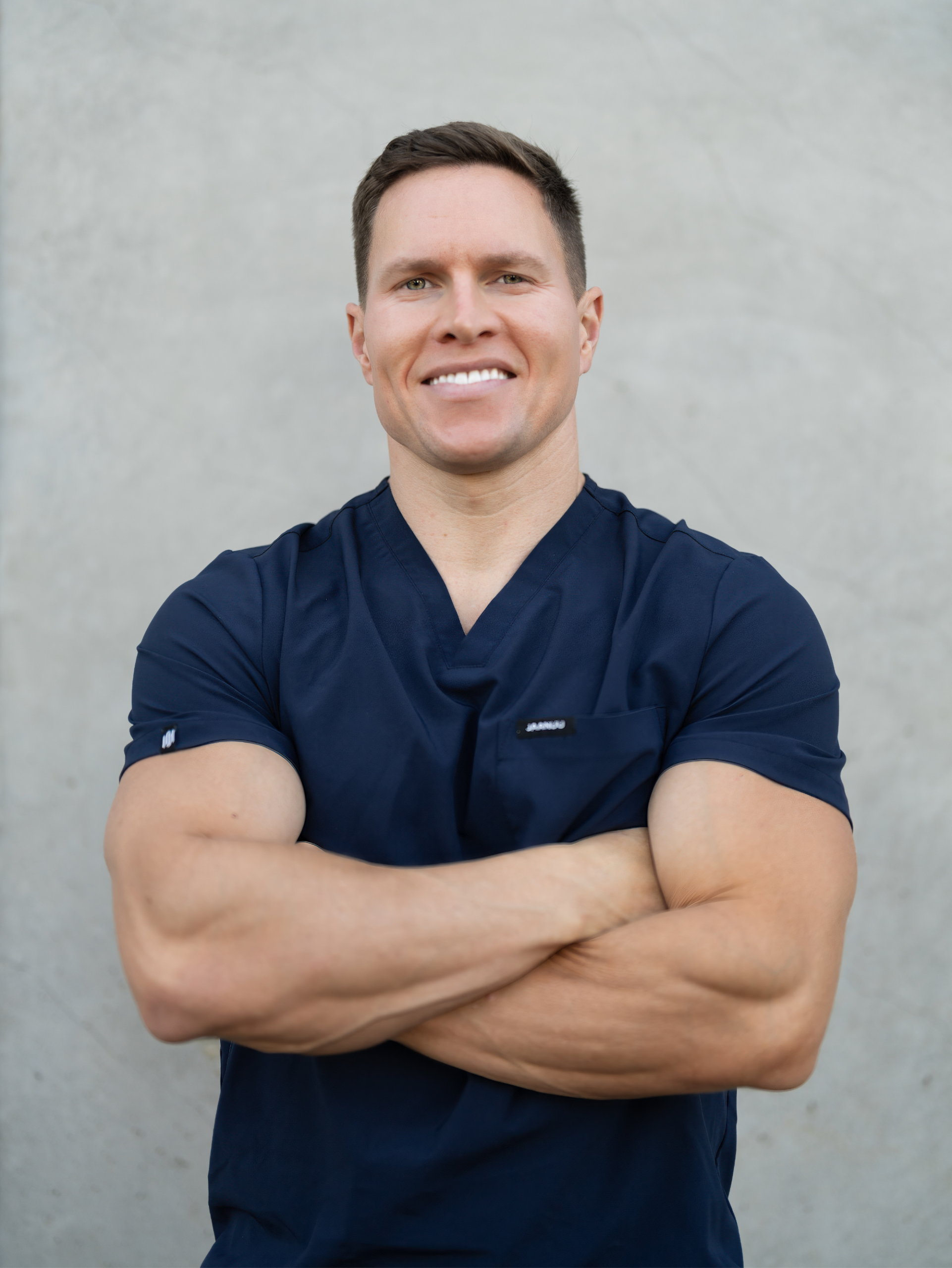
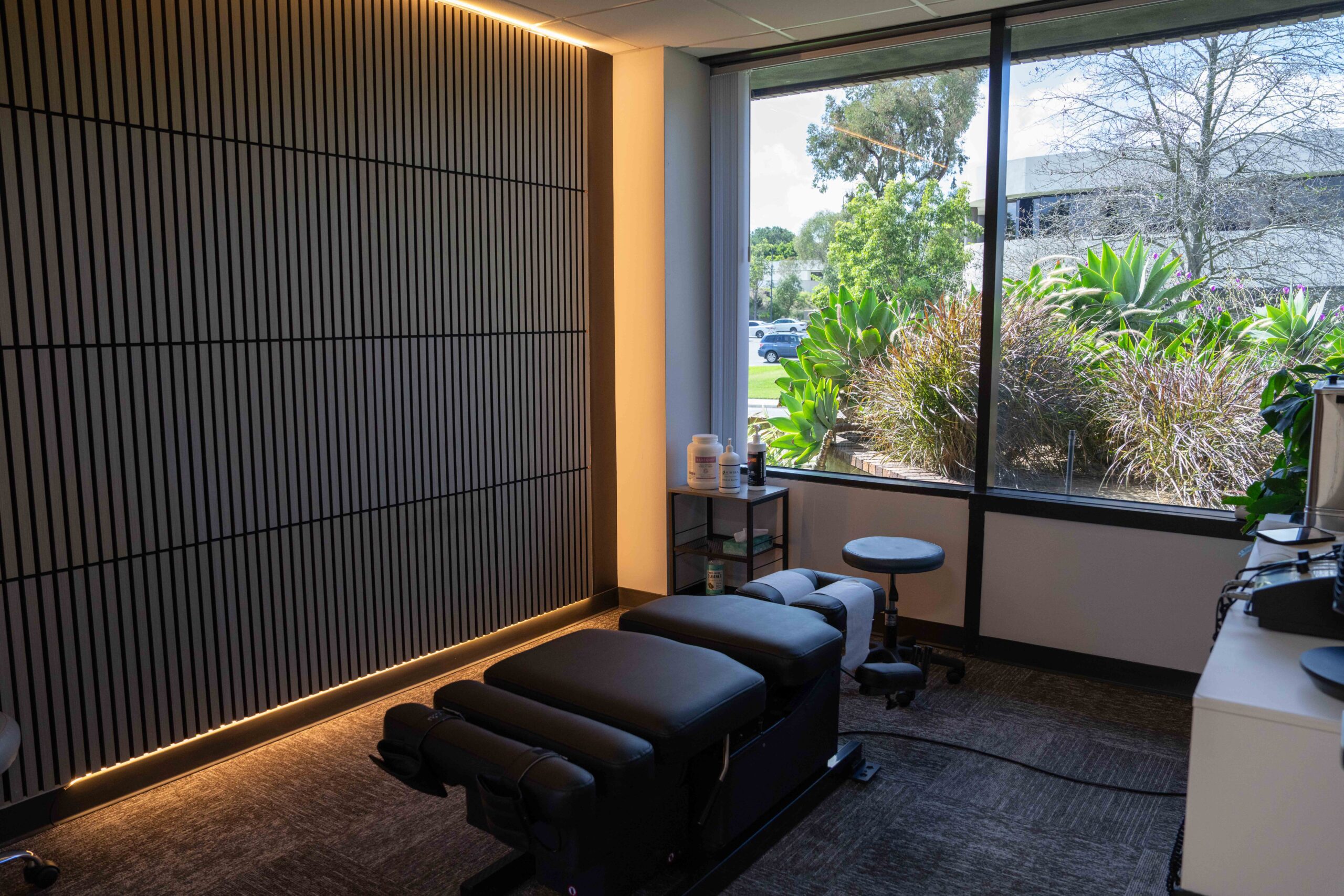
You will see Dr. Jordan Loewenstein at every appointment. Not an associate, not a rotating schedule of providers, not a five-minute pass-through. Forty-five minutes on your first visit, thirty on follow-ups — one-on-one, start to finish.
He holds a Master’s in Nutrition alongside his Doctorate of Chiropractic, which matters when a recovery stalls and the answer is in how you are sleeping, eating, or loading the tissue between visits.

Done Managing
the Pain?
Find out exactly what’s causing it and what it’ll take to fix it. Treatment starts on visit one.