Jordan Loewenstein, D.C. | La Jolla Chiropractor
Sports chiropractor
in San Diego
Get back to moving.
Whether you're a runner with a nagging IT band, a surfer with a locked-up shoulder, or a gym-goer who can't shake that hip flexor pull — the right treatment gets you back faster than rest alone.
Yes, chiropractic care helps many sports injuries, from muscle strains and tendon overuse to joint restrictions. Dr. Loewenstein, who is ART-certified, finds the injured tissue and treats it with Active Release soft tissue work, adjustment, and rehab so you can return to training safely. Many athletes improve within a few weeks; fractures and full tears are referred out.
Not just an
adjustment.
Most sports pain isn't just a joint problem — it's scar tissue, adhesions, and nerve irritation layered on top of each other. That's why Dr. Loewenstein combines chiropractic adjustments with Active Release Techniques (ART) to address both at once.
What is Active Release Technique (ART)?
ART is a patented, hands-on soft tissue method that treats muscles, tendons, ligaments, fascia, and nerves. During a session, Dr. Loewenstein applies precise tension to a specific tissue while you move through a full range of motion — breaking up the dense scar tissue and adhesions that build up from overuse, repetitive strain, or acute injury. ART targets the exact tissue causing the problem, not just the area that hurts.
You don't need to compete professionally to benefit. If you use your body actively and something hurts, that's reason enough.
Five injuries that
respond fast to ART
These aren't the only conditions we treat — but they're the ones where the combination of chiropractic adjustments and ART makes the biggest difference, fastest.
Sports chiro vs.
physical therapy
Both have a place in sports medicine. Here's how to think about which to start with — and when you might need both.
- Your pain is tied to joint restriction, nerve irritation, or myofascial adhesions
- You want to identify and treat the root cause — not just manage symptoms
- You have an overuse injury that hasn't responded to rest
- You want to stay training while recovering — not shut down completely
- You want to understand the biomechanical reason it happened in the first place
- Post-surgical rehabilitation requiring structured strength progressions
- Significant muscle weakness or neurological rehab after major injury
- Long-term sports performance programming and movement screening
- Conditions that require weeks of supervised exercise prescription
Many athletes benefit from both. If you need a referral to a PT or another specialist, Dr. Loewenstein will tell you directly and point you in the right direction.
Questions athletes
always ask
Straight answers — no fluff.
ART is a patented, hands-on soft tissue method used to treat muscles, tendons, ligaments, fascia, and nerves. During a session, Dr. Loewenstein applies precise tension to a specific tissue while you move through a full range of motion. This combination breaks up the dense scar tissue and adhesions that build up from overuse, repetitive strain, or acute injury. ART is highly effective for sports injuries because it targets the exact tissue causing the problem — not just the area that hurts.
ART can be uncomfortable during treatment — most patients describe it as a "good pain," similar to a deep sports massage on a tight muscle. The sensation comes from applying tension to adhered tissue while you move through a range of motion. Any discomfort typically fades within 24 hours, and most patients feel noticeably looser and less painful right after the session. Dr. Loewenstein always works within your comfort level and adjusts pressure based on your feedback throughout the treatment.
Both treat musculoskeletal injuries, but the tools differ. A sports chiropractor focuses on joint manipulation, soft tissue techniques like ART, and restoring the nervous system's role in movement. A physical therapist emphasizes exercise-based rehabilitation, strengthening, and movement retraining. Many athletes benefit from both — but if your pain is tied to joint restriction, nerve irritation, or myofascial adhesions, a sports chiropractor is often the faster starting point.
Yes. Chiropractic care is extremely safe for athletes when performed by a qualified provider. Serious adverse events from chiropractic treatment are rare. Sports chiropractors are specifically trained in musculoskeletal assessment and understand how the body moves under athletic demand. Dr. Loewenstein will conduct a thorough evaluation before any treatment to rule out contraindications. Many professional sports teams and Olympic programs employ chiropractors as a core part of their medical staff — evidence of how well the profession fits the athletic population.
Most running-related injuries like IT band syndrome, plantar fasciitis, and runner's knee respond within 4–8 visits, depending on how chronic the condition is and how consistently you do your corrective exercises between appointments. Acute injuries caught early often resolve faster. During your first visit, Dr. Loewenstein will assess your injury and give you a realistic treatment timeline — you're never left guessing where you stand in your recovery.
In most cases you don't have to stop training entirely — the goal is to keep you moving while recovering smarter. Dr. Loewenstein will typically recommend modifying your training load rather than complete rest, and many athletes run or train between visits. A realistic return to full training depends on the injury type and severity, but most overuse injuries allow a graded return within a few weeks when addressed with ART and corrective exercise rather than rest alone.
See a sports chiropractor first if your injury involves muscle tightness, joint stiffness, nerve irritation, or overuse pain that hasn't involved a fracture, dislocation, or full tendon rupture. Chiropractors excel at the soft tissue and joint dysfunction issues that make up the vast majority of sports injuries. See an orthopedic doctor if you suspect a broken bone, ligament tear requiring surgery, or if conservative care hasn't helped after a reasonable course of treatment. If needed, Dr. Loewenstein will refer you to the right specialist.
Your first visit typically lasts 45–60 minutes. Dr. Loewenstein will start with a detailed history of your injury — when it started, what makes it worse, and what you've already tried. He'll then perform a functional movement and orthopedic assessment to identify the root cause of your pain. If appropriate, treatment may begin the same day. You'll leave with a clear understanding of your diagnosis, a proposed treatment plan, and exercises or activity modifications to start immediately.
No referral is needed in California. Chiropractors are primary care providers for musculoskeletal conditions, which means you can book directly without seeing your primary care physician first. This makes it easy to get assessed quickly after an injury rather than waiting weeks for a referral to work through the system. Same-day and next-day appointments are typically available — book online at sdspinecare.com or call (858) 558-3111.
Many insurance plans — including PPO plans, Medicare, and some HMOs — cover chiropractic care, though the specific number of covered visits and copay amounts vary by plan. It's best to call your insurance provider before your first visit to understand your benefits. The office can also help verify your coverage. If you're uninsured or out-of-network, affordable self-pay rates are available so cost is not a barrier to getting the care you need.
The majority of patients here are recreational athletes, not professionals. Whether you're a weekend warrior, a UCSD student athlete, a casual cyclist, a surfer, or someone who hit the gym a bit too hard — sports chiropractic is designed for you. You don't need to compete at any level to benefit from ART and chiropractic. If you use your body actively and something hurts, that's reason enough to get it evaluated and treated properly.

One doctor.
Every visit.
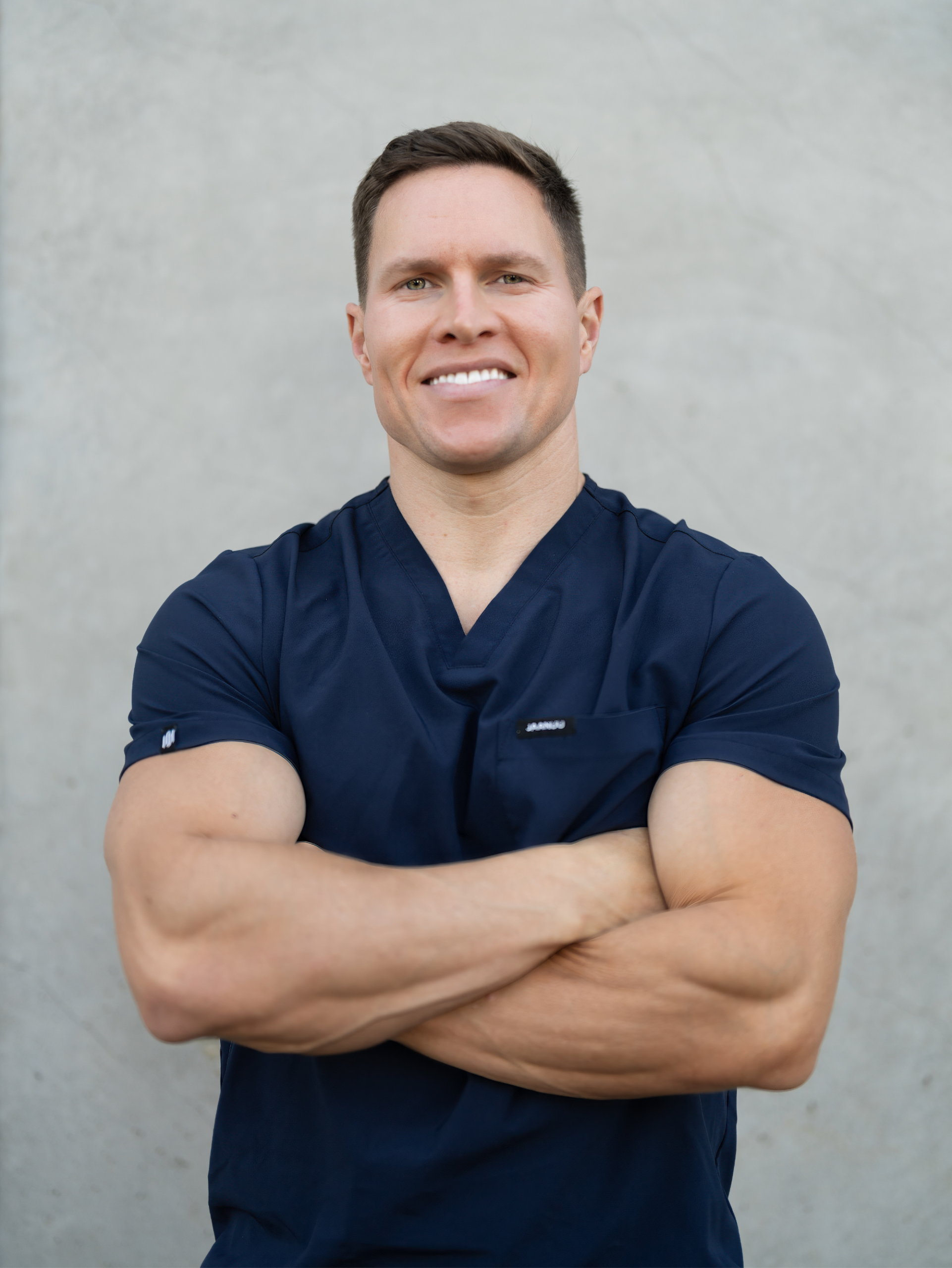
You will see Dr. Jordan Loewenstein at every appointment. Not an associate, not a rotating schedule of providers, not a five-minute pass-through. Forty-five minutes on your first visit, thirty on follow-ups — one-on-one, start to finish.
He holds a Master’s in Nutrition alongside his Doctorate of Chiropractic, which matters when a recovery stalls and the answer is in how you are sleeping, eating, or loading the tissue between visits.

Stop managing it.
Fix it.
Most sports injuries don't need surgery, injections, or months off. They need the right diagnosis and the right hands-on treatment — starting now.