Jordan Loewenstein, D.C. | La Jolla Chiropractor

\n\n
Exercise & Stretch Library

Knee Pain
Stretches &
Exercises

Clinician-recommended stretches and strengthening exercises to relieve knee pain — plus the dos & don’ts that matter and how chiropractic care helps when self-care isn’t enough. From a San Diego practice that finds the cause first.

Clinician-Recommended
Builds Knee Strength
UTC San Diego — Near UCSD
Strengthen the Quads
Strong thighs protect the knee
Low-Impact First
Build up before you load
Stay Pain-Free
Work the range that doesn’t hurt
Know the Red Flags
Locking or giving way = get seen

What Helps
Knee Pain

The best approach to knee pain is to strengthen the quadriceps and glutes while gently stretching the muscles around the joint — quad sets, straight leg raises, and bridges, plus quad, hamstring, and calf stretches. Most overuse and arthritic knee pain improves with strengthening rather than rest. If your knee locks, gives way, or swelled up suddenly, get evaluated.

1 in 4
adults are affected by frequent knee pain
#1
quad strength is the biggest protector of the knee
6–8
weeks of consistent strengthening for many overuse cases
Low
impact movement keeps knees healthier than rest

Most knee pain is mechanical and muscular — from overuse, weakness, or wear rather than serious damage. The knee depends heavily on the muscles above and below it, so when the quads, glutes, or calves are weak, the joint takes more load than it should.

That’s why the fix is mostly about strength. The exercises below rebuild the quadriceps and hip muscles that protect and align the knee, while the stretches ease the tight quads, hamstrings, and IT band that pull on it.

Work within a pain-free range and build up gradually. Mild muscle fatigue is fine; sharp pain or swelling is not. If the knee locks, catches, or gives way, read the “when to see a professional” section below. This page is a starting point, not a diagnosis.

Strength Over Rest
The knee is protected by strong quads and glutes, not by resting it. Keep the muscles working.
Low-Impact Cardio
Walking, cycling, and swimming keep the knee moving without the pounding of running or jumping.
Mind Your Alignment
Keep the knee tracking over the toes and don’t let it cave inward when you squat or step down.

Recommended
Stretches

Gentle stretches to ease the tight muscles that pull on the knee. Keep them comfortable and never force a painful range. Tap any card to watch a demo.

Standing Quad Stretch demonstrationWatch demo
01
Standing Quad Stretch
Standing, pull your heel toward your buttock with knees together to stretch the front of the thigh. Tight quads pull on the kneecap.
Hold 20–30s · 2x each side
Hamstring Stretch demonstrationWatch demo
02
Hamstring Stretch
On your back, loop a strap around your foot and raise the leg with a slight knee bend. Eases tight hamstrings that load the knee.
Hold 20–30s · 2x each side
Calf Stretch demonstrationWatch demo
03
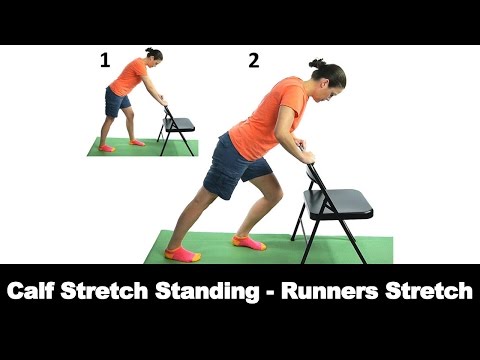
Calf Stretch
Facing a wall, step one foot back and press the heel down with the knee straight. Loosens the calf that affects knee mechanics.
Hold 20–30s · 2x each side
IT Band Stretch demonstrationWatch demo
04
IT Band Stretch
Standing, cross one leg behind the other and lean away to stretch the outer thigh and IT band that tugs on the outside of the knee.
Hold 20–30s · 2x each side
Figure-4 Glute Stretch demonstrationWatch demo
05
Figure-4 Glute Stretch
On your back, cross one ankle over the opposite knee and pull the thigh in. Loose hips take stress off the knee.
Hold 20–30s · 2x each side
Full Knee Routine demonstrationFollow along
06
Full Knee Routine
Short on time? Follow this real-time knee routine through the key stretches and exercises in one guided sequence.
Guided · once daily

Recommended
Exercises

Strengthening the quads, glutes, and calves is what protects the knee and keeps the pain from returning. Start gentle and build up gradually.
Quad Sets demonstrationWatch demo
01
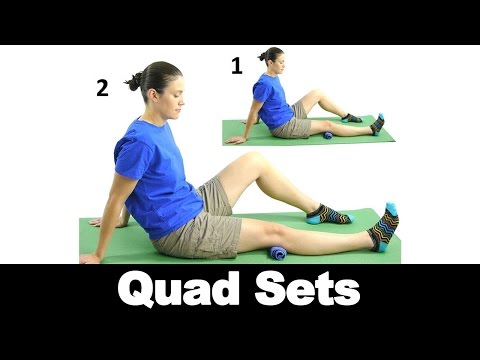
Quad Sets
Sitting with the leg straight, tighten the thigh to press the back of the knee down. Rebuilds quad strength with no joint movement.
Hold 5s · 10 reps
Straight Leg Raise demonstrationWatch demo
02
Straight Leg Raise
Lying down, one knee bent, keep the other leg straight and lift it to the height of the bent knee. Strengthens the quad without bending the knee.
10–12 reps · 2–3 sets
Seated Knee Extension demonstrationWatch demo
03
Seated Knee Extension
Seated, straighten the knee against gravity and lower slowly. Builds strength through the knee’s range as pain allows.
10–12 reps
Clamshell demonstrationWatch demo
04
Clamshell
On your side, knees bent, lift the top knee keeping feet together. Strong hips keep the knee tracking properly.
10–15 reps each side
Glute Bridge demonstrationWatch demo
05
Glute Bridge
On your back, squeeze your glutes and lift your hips. Strong glutes share the load the knee would otherwise carry.
Hold 3–5s · 10–12 reps
Calf Raises demonstrationWatch demo
06
Calf Raises
Rise onto the balls of your feet and lower slowly. Strong calves support the knee and absorb impact.
10–15 reps · 2 sets
Knee pain not improving on its own?
Book an Exam in San Diego

Dos &
Don’ts

The knee responds to steady strengthening and sensible loading. These habits help it recover — and the ones to avoid keep it irritated.

Do
Strengthen your quads and glutes — they are the knee’s main shock absorbers.
Keep moving with low-impact activity like walking, cycling, or swimming.
Warm up before activity and progress your loads gradually.
Ice after activity if the knee is swollen or irritated.
Wear supportive footwear and keep the knee tracking over the toes.
Stay consistent — strength built over weeks is what protects the knee.
Don’t
Push through sharp pain or pain that makes the knee swell.
Do deep, loaded squats or lunges during a flare.
Rest completely for long stretches — it weakens the supporting muscles.
Run or jump on a painful, swollen knee.
Let your knee cave inward when you squat or step down.
Ignore locking, catching, or the knee giving way — get it checked.

How Chiropractic
Helps Knee Pain

The knee rarely works alone — the hip, ankle, and your alignment all feed into it. A proper exam sorts out what’s really driving the pain.

01
Find the Cause
An exam of the knee, hip, and ankle pinpoints whether weakness, alignment, or joint wear is driving your pain.
02
Restore Motion
Joint mobilization of the knee and surrounding joints frees up stiff, guarded movement.
03
Release Tension
Soft-tissue work calms the tight quads, IT band, and calves that pull on the knee.
04
Rebuild Strength
You leave with the right quad and hip strengthening for your knee — so the relief holds up.
What the research says
For knee osteoarthritis and most overuse knee pain, exercise and strengthening are recommended first-line and can reduce pain as effectively as some medications. Combining hands-on care with targeted strengthening helps restore function and confidence.

When to See
a Professional

Most knee pain is mechanical and responds well to strengthening. But some signs mean you should be evaluated rather than push through. See a professional promptly if you have:

The knee locking, catching, or giving way
Significant swelling that came on rapidly
Knee pain after a twisting injury or a direct blow
Inability to fully straighten or bear weight on the knee
Redness, warmth, or fever around the joint
No improvement after a few weeks of self-care
Seek urgent care for a knee that can’t bear weight after an injury, locks completely, or is hot, red, and swollen with fever.

Questions About
Knee Pain

The questions patients ask most — answered directly.

What is the best exercise for knee pain?

Quad sets and straight leg raises are the safest, most effective starting points because they strengthen the quadriceps without bending the painful knee. As pain settles, add glute and calf strengthening. Strong thigh and hip muscles are the knee’s best protection.

Should I rest or exercise with knee pain?

Gentle, low-impact exercise is usually better than rest. Complete rest weakens the muscles that support the knee. Keep moving with walking, cycling, or swimming, and avoid the high-impact or deep-bend activities that sharply hurt.

Are squats bad for my knees?

Not inherently. Controlled, pain-free squats within a comfortable range actually strengthen the knee. Problems come from too much depth or load too soon, or letting the knee cave inward. Build up gradually with good form.

Why does my knee hurt going up or down stairs?

Stair pain is often kneecap-related and points to quad and hip weakness or tracking issues. Strengthening the quads, glutes, and calves usually improves it. If the knee also swells or gives way, get it evaluated.

How long does knee pain take to improve?

Many overuse and mild arthritic knee problems improve over 6 to 8 weeks of consistent strengthening. If pain follows a specific injury, the knee locks or gives way, or it isn’t improving, an evaluation helps identify the cause.

Can a chiropractor help with knee pain?

Yes. A chiropractor can assess the knee along with the hip, ankle, and alignment that affect it, use hands-on care to restore motion and calm irritated tissue, and guide the strengthening that protects the joint. Dr. Loewenstein performs a thorough exam on the first visit at the UTC San Diego clinic.

Get Your Knees
Moving Again

These exercises are a great start. For a plan matched to what’s actually causing your knee pain, book an exam — treatment starts on visit one.

5151 Shoreham Place, Suite 175 · UTC San Diego, CA 92122 · Near UCSD
This page is general educational information and is not a substitute for a professional diagnosis or individualized medical advice. Stop any exercise that causes sharp pain or knee swelling. If your knee locks, gives way, or you can’t bear weight, consult a qualified healthcare provider before starting these exercises.