Jordan Loewenstein, D.C. | La Jolla Chiropractor

\n\n
Exercise & Stretch Library

Mid Back
Stretches &
Exercises

Clinician-recommended stretches and exercises to relieve mid back (thoracic) pain and desk-posture stiffness — restore motion, strengthen your posture, and learn the dos & don’ts that matter. From a San Diego practice that finds the cause first.

Clinician-Recommended
Great for Desk Posture
UTC San Diego — Near UCSD
Mobilize the Spine
Free up a stiff mid back
Open the Chest
Counter the desk hunch
Strengthen the Back
Wake the postural muscles
Know the Red Flags
Chest or rib pain = get seen

What Helps
Mid Back Pain

The best moves for mid back pain restore rotation and extension in the stiff thoracic spine and strengthen the muscles between the shoulder blades — cat-cow, thoracic rotation, and extension, plus rows and scapular work. Most mid back pain is postural and eases with movement. If pain wraps around the ribs, follows an injury, or comes with chest symptoms, get evaluated.

Desk
posture and prolonged sitting are the most common drivers
#1
a stiff mid back forces the neck and low back to overwork
5–10
minutes a day of mobility and posture work is enough for most
Often
it eases as posture and back strength improve

Mid back (thoracic) pain is usually a posture and mobility problem. Hours hunched over a desk or phone leave the mid back stiff and rounded, and the muscles between the shoulder blades stretched and weak.

A stiff thoracic spine doesn’t just ache on its own — it forces the neck and lower back to pick up the slack, which is why mid back stiffness often travels. The fix is to restore rotation and extension in the thoracic spine and strengthen the postural muscles that hold you upright.

These movements should feel like a relief, not a strain. Keep them gentle — if pain wraps sharply around the ribs, follows an injury, or comes with chest or breathing symptoms, ease off and read the safety section below. This page is a starting point, not a diagnosis.

Move It Often
The thoracic spine stiffens with sitting. A few rotations and extensions through the day keep it mobile.
Open and Strengthen
Pair chest-opening stretches with rowing and scapular work to undo the desk hunch.
Set Up Your Desk
Screen at eye level and a supportive chair take the daily load off your mid back.

Recommended
Stretches

Gentle mobility to restore rotation and extension in a stiff mid back, plus chest opening to undo the hunch. Move slowly and never force a twist. Tap any card to watch a demo.

Cat-Cow demonstrationWatch demo
01
Cat-Cow
On hands and knees, alternate arching and rounding the spine. Gently mobilizes the whole back, including the stiff mid section.
8–10 slow cycles
Seated Thoracic Extension demonstrationWatch demo
02
Seated Thoracic Extension
Sitting, hands behind your head, gently arch the upper back over the chair’s top edge. Restores the extension lost to hunching.
8–10 gentle reps
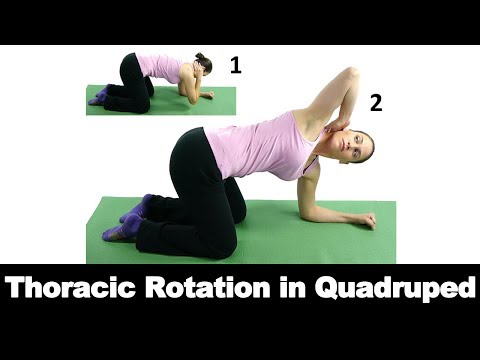
Thoracic Rotation demonstrationWatch demo
03
Thoracic Rotation
On hands and knees, hand behind your head, rotate your elbow up toward the ceiling and back down. Restores mid-back rotation.
8–10 reps each side
Child’s Pose demonstrationWatch demo
04
Child’s Pose
Sit your hips back toward your heels and reach forward, letting the mid and lower back lengthen and relax.
Hold 30s · 2–3x
Doorway Pec Stretch demonstrationWatch demo
05
Doorway Pec Stretch
Forearms on a doorframe, step gently through to open the chest. Loosens the tight chest that rounds the mid back forward.
Hold 20–30s · 2–3x
Upper Back Follow-Along demonstrationFollow along
06
Upper Back Follow-Along
Follow this guided upper back routine through the key stretches and exercises in one sequence — a great daily reset.
Guided · once daily

Recommended
Exercises

Strengthening the muscles between the shoulder blades is what holds your posture and keeps the stiffness from returning. Keep these controlled.

Scapular Squeezes demonstrationWatch demo
01
Scapular Squeezes
Squeeze your shoulder blades together and down, away from your ears. The base of every posture program.
Hold 5s · 10 reps
Seated Rows (Band) demonstrationWatch demo
02
Seated Rows (Band)
Anchor a band and pull your elbows back, squeezing the shoulder blades. Strengthens the mid-back muscles that hold you upright.
10–12 reps · 2–3 sets
Prone Y-T-W-I demonstrationWatch demo
03
Prone Y-T-W-I
Lying face down, lift the arms into Y, T, W and I shapes, squeezing the shoulder blades each time. Builds the postural muscles directly.
5–8 reps each letter
Bird-Dog demonstrationWatch demo
04
Bird-Dog
On hands and knees, extend the opposite arm and leg, holding the spine steady. Trains the whole back to stabilize.
8–10 reps each side
Prone W demonstrationWatch demo
05
Prone W
Face down, bend the elbows and squeeze the shoulder blades into a W. Targets the lower traps that fight the hunch.
8–10 reps
Chin Tucks demonstrationWatch demo
06
Chin Tucks
Draw the chin straight back to stack the head over the spine. Good mid-back posture starts with the head and neck.
Hold 3–5s · 10 reps
Mid back stiff no matter how you sit?
Book an Exam in San Diego

Dos &
Don’ts

The mid back loves movement and good posture. These habits help — and these keep it stiff.

Do
Move your mid back through rotation and extension often during the day.
Open your chest with stretches to counter the desk hunch.
Strengthen the muscles between your shoulder blades with rows.
Set your screen at eye level and use a supportive chair.
Take micro-breaks to sit tall and reset every 30–60 minutes.
Stay consistent — posture changes over weeks of small habits.
Don’t
Stay hunched over a screen for hours without resetting.
Force a painful twist or extension.
Round and load the mid back with heavy lifting during a flare.
Rely on stretching alone while ignoring back strengthening.
Slouch into soft couches for long stretches.
Ignore pain that wraps around the ribs or comes with chest symptoms.

How Chiropractic
Helps Mid Back Pain

The mid back responds especially well to hands-on care, and it ties directly into the neck and your posture. A proper exam connects them.

01
Find the Cause
An exam sorts simple postural stiffness from joint restriction or rib involvement driving the pain.
02
Restore Motion
Mobilization and adjustment of the thoracic spine and ribs free up the stiff, restricted segments.
03
Release Tension
Soft-tissue work calms the tight muscles between and around the shoulder blades.
04
Strengthen Posture
You leave with the rowing, scapular, and posture program that keeps the mid back upright and pain-free.
What the research says
Mechanical mid back pain responds well to mobilization, exercise, and postural correction. Combining hands-on care that restores thoracic motion with strengthening of the postural muscles helps relieve pain and improve how you carry yourself.

When to See
a Professional

Most mid back pain is mechanical and safe to treat with movement. But because the thoracic spine sits near the chest, some signs mean you should be evaluated. See a professional promptly if you have:

Pain that wraps sharply around the ribs or chest
Mid back pain that began after a fall or accident
Numbness, tingling, or weakness in the legs
Pain that is worse at night or with rest
Unexplained fever or weight loss with the pain
No improvement after a couple of weeks of self-care
Seek urgent care for mid back pain with chest pain, shortness of breath, or after major trauma.

Questions About
Mid Back Pain

The questions patients ask most — answered directly.

What is the best stretch for mid back pain?

Cat-cow, seated thoracic extension, and thoracic rotation are the most effective starting points because they restore the extension and rotation a stiff mid back loses to sitting. Pair them with chest-opening stretches and gentle movement through the day.

Why does my mid back hurt from sitting?

Sitting hunched over a screen keeps the thoracic spine rounded and the muscles between the shoulder blades stretched and weak. That combination leaves the mid back stiff and achy. Mobility work, chest stretches, and back strengthening address the cause.

Should I stretch or strengthen for mid back pain?

Both. Stretching and mobility restore the motion in the stiff thoracic spine, while strengthening the postural muscles holds you upright so the stiffness doesn’t return. A combination, plus better desk habits, works best.

Is mid back pain serious?

Most mid back pain is mechanical and harmless. But because the thoracic spine sits near the chest, pain that wraps around the ribs, comes with chest or breathing symptoms, or follows trauma should be evaluated to rule out other causes.

How long does mid back pain last?

Most postural mid back pain improves within a couple of weeks with mobility, stretching, and posture changes. If it isn’t improving, keeps returning, or comes with concerning symptoms, an evaluation helps find the cause.

Can a chiropractor help with mid back pain?

Yes. The mid back responds especially well to hands-on care. A chiropractor can restore thoracic motion, release the tight muscles, and guide the posture and strengthening that keeps it from returning. Dr. Loewenstein performs a thorough exam on the first visit at the UTC San Diego clinic.

Stand Tall,
Pain Free

These stretches are a great start. For a plan matched to what’s stiffening your mid back, book an exam — treatment starts on visit one.

5151 Shoreham Place, Suite 175 · UTC San Diego, CA 92122 · Near UCSD
This page is general educational information and is not a substitute for a professional diagnosis or individualized medical advice. Stop any movement that causes sharp pain around the ribs or chest. If you have mid back pain after an injury, with chest or breathing symptoms, or any warning signs above, consult a qualified healthcare provider before starting these stretches.