Jordan Loewenstein, D.C. | La Jolla Chiropractor
Knee Pain
By Location
Where the pain sits narrows the list fast. Pick the spot on your knee that hurts and you’ll get the usual suspects, the clues that tell them apart, a simple stretch and strength program, and what to do in the meantime.
Where Does It
Actually Hurt?
Knee pain location is the single most useful clue you can give me before I ever touch the knee. Pain around the kneecap that flares after sitting is a different problem than sharp pain on the outer knob when you run downhill, and both are different from tenderness right on the inside joint line. Find your spot below, read the clues, then start the matching program.
One more thing that helps more than people expect: try to point to the pain with one finger. If you can put a fingertip on it, we are usually dealing with one specific tissue. If you end up cupping the whole knee with your palm, the problem is more joint-wide, and that points somewhere different. Keep that in mind as you read.
Pick Your
Sore Spot
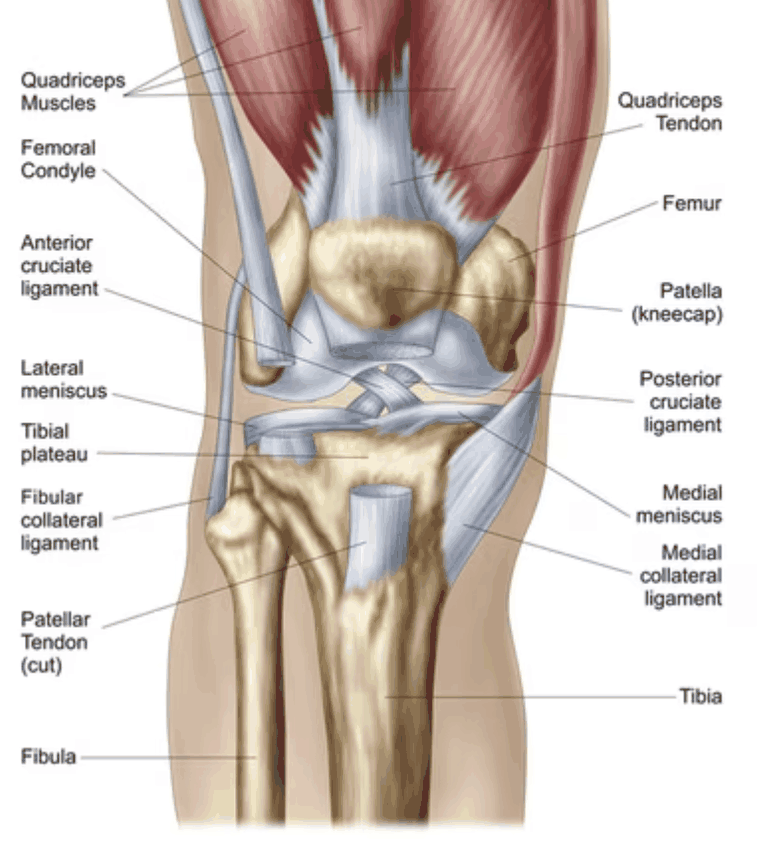
Pick the spot on your knee that hurts. You’ll get the conditions that live there, the clues that tell them apart, and the stretches and exercises for each one.
Around or Under the Kneecap
This is the most common spot by a wide margin, especially in runners, cyclists, hikers, and people who sit all day. The pain is usually vague and hard to pin down, it wraps around or under the kneecap instead of sitting on one point, and it shows up on stairs long before it shows up walking on flat ground.
Narrow It Down
Front-of-knee pain covers five common problems. The height of the sore spot and whether you can cover it with one fingertip separate them almost every time.
- The knee aches after you have been sitting with it bent, and the first minute of walking is stiff
- Going down stairs hurts more than going up
- Grinding or crunching in a squat, but no real swelling
- No locking and no giving way
- 01Standing Quad StretchHold 30s · 2x each side
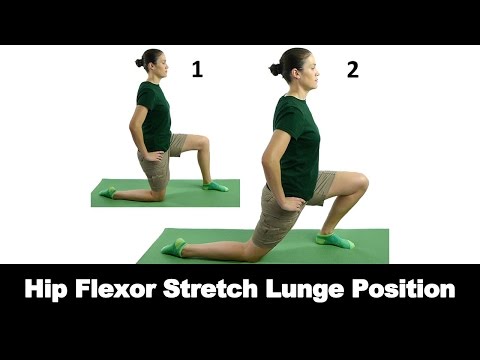
- 02Hip Flexor Lunge StretchHold 45s · 2x each side
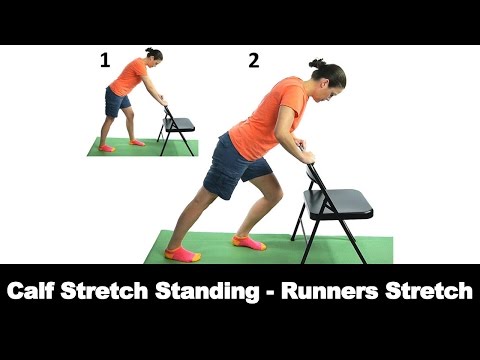
- 03Standing Calf StretchHold 30s · 2x each side
- 01Wall SitHold 45s · 4 rounds
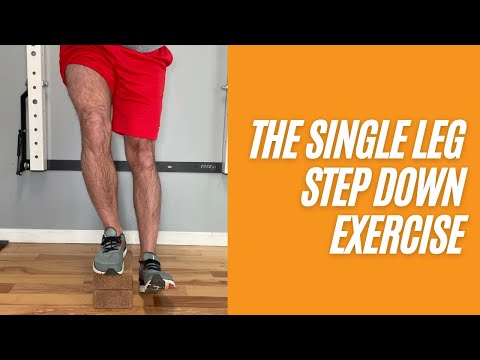
- 02Step-Downs3 sets of 10 each leg
- 03Glute Bridge3 sets of 12
- 04Clamshell3 sets of 15 each side
- Cut running, hiking or stair volume by about 30 percent for two weeks
- Use a 45-second wall sit as a warm-up before a walk or run, it genuinely takes the edge off
- Straighten the leg out every 30 to 40 minutes of sitting
- Squat past 90 degrees until step-downs are pain-free
- Sit through a whole movie or flight with the knee bent
- Push through pain above 3 out of 10 hoping it loosens up
- You can cover the sore spot with one fingertip
- Jumping, sprinting and heavy squats are the worst offenders
- It warms up during activity and hurts most a few hours afterward
- Pressing that exact spot reproduces your pain
- 01Standing Quad StretchHold 30s · 2x each side
- 02Standing Calf StretchHold 30s · 2x each side
- 01Wall SitHold 45s · 4 rounds
- 02Step-Downs3 sets of 10 each leg · 3s down
- 03Glute Bridge3 sets of 12
- 04Straight Leg Raise3 sets of 10 each leg
- Load the tendon daily with slow, heavy holds. Wall sits are perfect for this
- Take three full seconds to lower on every single rep
- Plan for 8 to 12 weeks. Tendons are slow and that is normal
- Rest it completely. Tendons get weaker and more painful with rest
- Jump or sprint until the slow strength work is pain-free
- Stretch it hard. Tendons dislike being compressed at the bone
- Pinpoint tenderness just above the kneecap, not below it
- Deep squats and heavy leg work set it off
- Common in lifters, volleyball and basketball players
- 01Standing Quad StretchHold 30s · 2x each side
- 02Hip Flexor Lunge StretchHold 45s · 2x each side
- 01Wall SitHold 45s · 4 rounds
- 02Step-Downs3 sets of 10 each leg
- 03Glute Bridge3 sets of 12
- 04Straight Leg Raise3 sets of 10 each leg
- Slow, heavy, pain-limited loading is the treatment
- Shorten your squat depth rather than cutting the weight to nothing
- Warm up with a wall sit before you lift
- Max out on squats or cleans while it is still irritable
- Bounce out of the bottom of a squat
- Ice it and rest. It needs load, not protection
- Worst when you stand around with the knee locked straight
- Kneeling directly on the front of the knee is very sore
- That area looks slightly puffy on both sides of the tendon
- Often started after a direct blow or a lot of hyperextending
- 01Hamstring StretchHold 30s · 3x each side
- 02Standing Calf StretchHold 30s · 2x each side
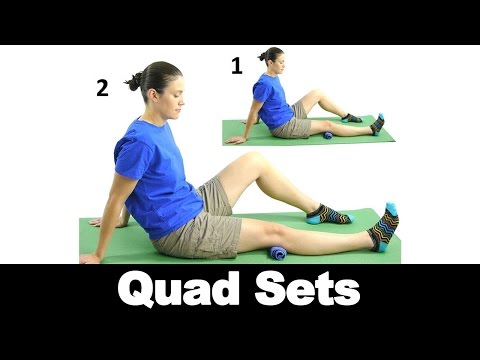
- 01Quad Sets3 sets of 10 · hold 5s
- 02Straight Leg Raise3 sets of 10 each leg
- 03Glute Bridge3 sets of 12
- Keep a soft knee when you stand. Avoid locking it back
- Try a sleeve or taping to offload the area, it often helps quickly
- Short frequent walks rather than long stationary standing
- Stand for long stretches with the knee pushed straight back
- Kneel directly on the front of the knee
- Do deep squats or seated leg extensions while it is angry
- You are roughly 10 to 15 and still growing
- There is a visible lump you can feel
- Running and jumping aggravate it, rest calms it down
- 01Standing Quad StretchHold 30s · 2x each side
- 02Hamstring StretchHold 30s · 3x each side
- 03Standing Calf StretchHold 30s · 2x each side
- 01Quad Sets3 sets of 10 · hold 5s
- 02Straight Leg Raise3 sets of 10 each leg
- 03Glute Bridge3 sets of 12
- Keep playing at whatever level stays under 3 out of 10
- Stretch quads and hamstrings daily through the growth spurt
- Ice the bump for 10 minutes after sport
- Stop all sport. That is rarely necessary and rarely helps
- Kneel on the bump
- Expect the lump to disappear. It usually stays and simply stops hurting
The sitting test. Sit with the knee bent for 20 minutes, then stand up. If the front of the knee is stiff and achy for the first minute of walking, that is textbook patellofemoral pain.
The fingertip test. Press the very bottom tip of the kneecap. Sharp and pinpoint there means think tendon. A vague ache around the edges means think joint surface.
The mirror test. Stand on the sore leg and lower into a slow half squat while watching your knee. If it dives inward toward your other leg, your hip is the thing to fix, not your knee.
- Cut the load, do not stop. Drop your running, hiking, or class volume by about 30 percent for two weeks instead of resting completely.
- Respect stairs. Take them one at a time, or go down sideways, until step-downs stop hurting.
- Do not sit bent for more than 30 to 40 minutes. Straighten the leg out, stand up, walk a lap.
- Park the deep stuff. No deep squats, lunges past 90 degrees, or jumping until wall sits and step-downs are pain-free.
- Use the wall sit as a warm-up. One 45-second hold before a walk or run often takes the edge off for the whole session.
The knee swells, locks up, or gives out from under you, or you develop a tender bony bump that was not there before. Those are not exercise problems.
The Inner Side, Facing Your Other Knee
The inside of the knee is the busiest neighborhood in the joint. The good news is that the four common problems here sit at different heights, so a careful finger and two or three questions usually sort it out before anyone orders an MRI.
Narrow It Down
Four problems share the inner knee, but they sit at different heights. Slide a finger from the kneecap inward to the joint line, then two inches further down onto the shin, and note where you flinch.
- Your finger lands below the joint line, on the inner shin
- Climbing stairs and getting out of bed are the worst moments
- You recently ramped up running, walking or hiking
- No catching, no locking, no real swelling
- 01Hamstring StretchHold 30s · 3x each side
- 02Figure-4 Glute StretchHold 45s · 2x each side
- 03Standing Quad StretchHold 30s · 2x each side
- 01Glute Bridge3 sets of 12
- 02Clamshell3 sets of 15 each side
- 03Straight Leg Raise3 sets of 10 each leg
- 04Step-Downs3 sets of 10 each leg
- Sleep with a pillow between your knees
- Build hamstring and glute strength. That is the actual fix, not rest
- Drop your mileage about 30 percent for two weeks, then rebuild slowly
- Jump your mileage back up in one week once it feels better
- Stretch into sharp pain right on the tender spot
- Leave it for months. This one gets stubborn if you ignore it
- Your finger lands dead on the joint line
- Twisting or pivoting on a planted foot hurts
- Deep squatting hurts, and it may catch or click
- It swelled the day after, not within the hour
- 01Hamstring StretchHold 30s · 3x each side
- 02Standing Quad StretchHold 30s · 2x each side
- 01Quad Sets3 sets of 10 · hold 5s
- 02Straight Leg Raise3 sets of 10 each leg
- 03Glute Bridge3 sets of 12
- 04Clamshell3 sets of 15 each side
- Keep walking. Movement is how the meniscus and cartilage get fed
- Work the range that does not catch, and expand it week by week
- Ice 10 to 15 minutes after activity if it puffs up
- Pivot or twist on a planted foot
- Squat past the point where it catches or pinches
- Assume you need surgery. Most degenerative tears do well with rehab
- There was a moment: a hit to the outside of the knee, or an awkward plant
- Tender along a band rather than one point
- It hurts when the knee gets pushed inward
- The knee feels loose or unstable side to side
- 01Hamstring StretchHold 30s · 3x each side
- 02Standing Quad StretchHold 30s · 2x each side
- 01Quad Sets3 sets of 10 · hold 5s
- 02Straight Leg Raise3 sets of 10 each leg
- 03Glute Bridge3 sets of 12
- 04Clamshell3 sets of 15 each side
- Protect it from side-to-side stress for two to four weeks
- Straight-line walking and stationary cycling are fine early on
- Get full straightening back early, before you chase strength
- Cut, pivot or play contact sport until it is no longer tender
- Keep testing it by pushing the knee sideways
- Wear a brace for weeks and never rebuild the strength underneath it
- You are past about 45 and it has crept up over years, not weeks
- Stiff for the first 20 to 30 minutes in the morning, then it loosens
- Achy after a long day on your feet, easier with gentle movement
- Possibly some bow-legged alignment
- 01Standing Quad StretchHold 30s · 2x each side
- 02Hamstring StretchHold 30s · 3x each side
- 03Standing Calf StretchHold 30s · 2x each side
- 01Quad Sets3 sets of 10 · hold 5s
- 02Straight Leg Raise3 sets of 10 each leg
- 03Glute Bridge3 sets of 12
- 04Step-Downs3 sets of 10 each leg
- Move most days. Bike, pool or walk, whatever you will actually do
- Strength train two or three times a week. This is the treatment, not an add-on
- Weight matters. Every pound off the body is roughly four pounds off the knee per step
- Rest it because it aches. Stiffness and weakness both get worse
- Do cardio only. Strength is the part that changes the long-term outcome
- Quit at week three. Give it the full eight
Walk your finger down. Start at the kneecap, slide inward until you feel the joint line, then keep going two inches down onto the shin. Whichever spot makes you flinch is your answer.
Time your morning stiffness. Under 30 minutes usually means arthritis. Over an hour, every single morning, deserves a medical workup rather than a stretching program.
The pillow test. If lying on your side with the knees pressed together aggravates it, sleep with a pillow between your knees tonight and see if the morning feels different.
- Keep walking. Cartilage and meniscus tissue are fed by movement, so total rest usually makes an inner-knee problem stiffer, not better.
- Avoid pivoting on a planted foot, deep squatting, and kneeling for a couple of weeks.
- Pillow between the knees if you sleep on your side.
- Swap running for the bike or the pool while it settles. Raise the bike seat slightly, which reduces how far the knee has to bend.
- Ice 10 to 15 minutes after activity if it is puffy. If the swelling hangs around more than a few days, get it examined.
The knee locks in a bent position and will not straighten, it swelled within an hour of an injury, or you cannot put weight on it. Those need an exam before any exercise program.
The Outer Side, Facing Away From You
Three different problems live out here and they sit within a couple of inches of each other. The exact height of the sore spot tells them apart better than almost anything else, so this is the location where the one-finger test earns its keep.
Narrow It Down
Three problems live within two inches of each other out here. The exact height of the sore spot is the single best clue, so point with one finger before you read on.
- Your finger lands above the joint line, on that bony knob
- It shows up at a predictable point in a run and settles quickly once you stop
- Downhill running is the worst. Walking is usually fine
- Sharp or burning rather than a dull ache
- 01Standing IT Band StretchHold 30s · 3x each side
- 02Figure-4 Glute StretchHold 45s · 2x each side
- 03Standing Quad StretchHold 30s · 2x each side
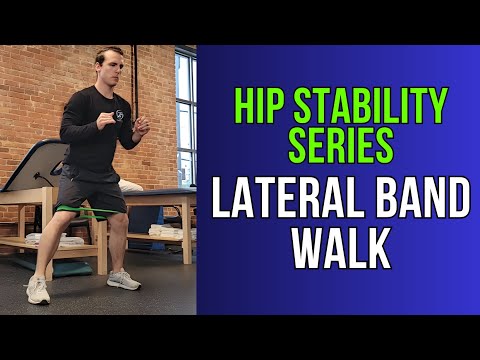
- 01Banded Lateral Walks10 to 15 steps each way · 3 rounds
- 02Clamshell3 sets of 15 each side
- 03Glute Bridge3 sets of 12
- 04Step-Downs3 sets of 10 each leg
- Cut mileage about 30 percent and stay on flat ground for two weeks
- Shorten your stride and lift your step rate by 5 to 10 percent
- Foam roll the outer thigh and hip muscle, above the knee
- Run downhill, or run the same direction on a cambered road
- Foam roll directly on the sore bony knob at the knee
- Keep running through sharp pain trying to loosen it up
- The ache sits on the outer edge of the kneecap
- Deep bend is the problem: full squats, stairs, long periods sitting
- A gritty crunch when you squat
- Jumping and sprinting spike it
- 01Standing Quad StretchHold 30s · 2x each side
- 02Standing IT Band StretchHold 30s · 3x each side
- 03Hip Flexor Lunge StretchHold 45s · 2x each side
- 01Wall SitHold 45s · 4 rounds
- 02Step-Downs3 sets of 10 each leg
- 03Banded Lateral Walks10 to 15 steps each way · 3 rounds
- 04Glute Bridge3 sets of 12
- Work only the depth that stays under 3 out of 10, then add depth weekly
- Watch in a mirror that the kneecap tracks over the middle of your foot
- Build the hip strength first. Depth comes after
- Squat or leg press deep while it is irritable
- Jump or sprint until step-downs feel clean
- Try to fix it with stretching alone. This is a strength problem
- Your finger lands dead on the joint line
- Twisting or pivoting on a planted foot hurts
- Catching, clicking, or a knee that puffs up the next day
- Squatting all the way down with a twist reproduces it
- 01Hamstring StretchHold 30s · 3x each side
- 02Standing Quad StretchHold 30s · 2x each side
- 01Quad Sets3 sets of 10 · hold 5s
- 02Straight Leg Raise3 sets of 10 each leg
- 03Glute Bridge3 sets of 12
- 04Clamshell3 sets of 15 each side
- Keep walking, and keep the knee moving through its comfortable range
- Expand the range a little each week rather than forcing it
- Ice after activity if it swells
- Twist or pivot on a planted foot
- Squat past the catch point
- Push through true locking. That needs an exam
- You can feel or hear a snap at one specific knee angle
- It comes and goes, often after a change in training
- Tender over a small cord-like band you can roll under your finger
- 01Standing Quad StretchHold 30s · 2x each side
- 02Hamstring StretchHold 30s · 3x each side
- 01Quad Sets3 sets of 10 · hold 5s
- 02Wall SitHold 45s · 4 rounds
- 03Glute Bridge3 sets of 12
- 04Step-Downs3 sets of 10 each leg
- Avoid the one specific angle that snaps it for a few weeks
- Build quad strength in the range that stays quiet
- Give it six to eight weeks before anyone talks about imaging
- Keep reproducing the snap to show people
- Do high-rep deep knee bending, cycling with a low seat included
- Assume it is a meniscus. Plica behaves differently and responds differently
Point with one finger and note the height. Two inches above the joint line on the bony knob is IT band until proven otherwise. Dead on the joint line changes the conversation to meniscus.
Side-lying leg lift. Lie on your good side and hold the top leg up toward the ceiling. If the hip burns out inside 30 seconds, hip weakness is driving this.
Single-leg squat in a mirror. If the knee dives inward as you lower, that is the mechanism that overloads the outside of the joint.
- Cut mileage by about 30 percent for two weeks and skip hills entirely. Downhill running is the single worst thing for an angry IT band.
- Shorten your stride slightly and pick up your step rate by 5 to 10 percent. Quicker, smaller steps.
- Change your route. Stop running on a cambered road or the same direction on a track every time.
- Foam roll the outer thigh and hip, not the knee. Rolling directly on the sore bony knob reliably makes it worse.
- Hold off on deep squats and explosive work until step-downs feel clean.
The knee catches, locks, gives way, or puffs up after activity. That pattern is a meniscus conversation, and stretching is not the answer to it.
Behind the Knee, In the Crease
Behind the knee is the location I take most seriously, because it is the one spot where something genuinely dangerous can hide. Most of the time it is a Baker’s cyst or an irritated hamstring tendon. Occasionally it is a blood clot, and that one cannot wait.
Narrow It Down
Most back-of-knee pain is a Baker’s cyst or an irritated hamstring tendon. Rule out the blood clot first, because that one cannot wait.
- One calf is swollen, warm, red, or visibly bigger than the other
- Recent surgery, a cast, a hospital stay or a long flight
- The pain arrived with no workout to explain it
- Do not stretch it and do not massage it. Go get seen today
- Tightness or fullness rather than sharp pain
- Worse at full straighten and at full bend
- You can feel a lump that firms up when the leg is straight and softens at 45 degrees
- There is usually another knee problem driving it
- 01Hamstring StretchHold 30s · 3x each side
- 02Standing Calf StretchHold 30s · 3x each side
- 01Quad Sets3 sets of 10 · hold 5s
- 02Straight Leg Raise3 sets of 10 each leg
- 03Glute Bridge3 sets of 12
- 04Calf Raises3 sets of 15
- Get the underlying knee problem assessed. The cyst is downstream of something else
- Keep the knee moving through its comfortable middle range
- Elevate the leg and take short frequent walks to move fluid out
- Force full straightening or full bending. That is exactly what hurts
- Try to squeeze, pop or massage it away
- Treat only the cyst and ignore what is producing the fluid
- Sprinting or driving the heel down brings it on
- Pressing the cord-like tendon reproduces it
- Walking is fine, speed work is not
- 01Hamstring StretchHold 30s · 3x each side
- 02Standing Calf StretchHold 30s · 2x each side
- 01Glute Bridge3 sets of 12
- 02Straight Leg Raise3 sets of 10 each leg
- 03Calf Raises3 sets of 15
- 04Quad Sets3 sets of 10 · hold 5s
- Load it gradually. Tendons respond to slow, progressive work
- Keep walking and cycling in the meantime
- Expect 8 to 12 weeks of consistency
- Sprint or do hill repeats early
- Stretch hard into the sore tendon
- Rest completely and wait for it to settle on its own
- It happened in a moment: a push-off, a sprint, a jump
- Pushing off and rising onto your toes both hurt
- The sore spot is below the knee crease, not in it
- 01Standing Calf StretchHold 30s · 3x each side
- 02Hamstring StretchHold 30s · 3x each side
- 01Calf Raises3 sets of 15 · 3s down
- 02Quad Sets3 sets of 10 · hold 5s
- 03Glute Bridge3 sets of 12
- 04Straight Leg Raise3 sets of 10 each leg
- Start double-leg calf raises early, then progress to single leg
- Walk within comfort from day one
- Return to running with walk-run intervals rather than straight back in
- Sprint or jump until single-leg calf raises are pain-free
- Stretch aggressively in the first few days
- Rush the return. Re-strains are extremely common here
- Deep ache at full bend, worst squatting all the way down
- Catching or locking
- Swelling after activity
- 01Hamstring StretchHold 30s · 3x each side
- 02Standing Quad StretchHold 30s · 2x each side
- 01Quad Sets3 sets of 10 · hold 5s
- 02Straight Leg Raise3 sets of 10 each leg
- 03Glute Bridge3 sets of 12
- 04Calf Raises3 sets of 15
- Stay inside the range that does not catch
- Keep walking
- Ice after activity if it swells
- Squat all the way down
- Twist under load
- Ignore locking. That changes the plan
The straighten-and-bend test. Feel behind the knee with the leg straight, then with it bent to 45 degrees. A lump that goes firm when straight and soft when bent is a Baker’s cyst.
Compare your calves. Measure or eyeball both. A one-sided calf that is swollen, warm, or red is a stop-everything sign.
Before anything else: if the back of your knee and calf hurt and you have had recent surgery, a long flight, or a period of not walking much, treat it as urgent and get medical care today. Do not stretch it and do not massage it.
- Rule out the clot first. Swollen, warm, red calf on one side means same-day medical care, not a stretching program.
- Do not force full straightening or full bending if a cyst is what you are dealing with. That is what makes it hurt.
- Skip sprinting, hill sprints, and heavy hamstring work for two to three weeks.
- Get the underlying knee examined. A Baker’s cyst almost always means something else in the joint, usually a meniscus or arthritis, is producing fluid. Treating only the cyst tends to fail.
- Elevate and walk. Short frequent walks move fluid out of the joint better than sitting with the leg down.
Your calf is swollen, warm, red, or tender on one side, particularly after surgery, a long flight, a cast, or any stretch of not moving much. That is how a blood clot presents and it is an emergency-room question, not a chiropractic one.
You Cannot Point To It
When someone cups the whole knee with their palm instead of pointing at it, that is information. Pain that is everywhere and nowhere is usually coming from the joint as a whole rather than one tissue, and once in a while the knee is not the source at all.
Narrow It Down
When you cup the whole knee instead of pointing at it, the problem is usually the joint as a whole. Once in a while the knee is not the source at all.
- Past about 45, and it has built up over years
- Stiff for the first 20 to 30 minutes in the morning
- Better with gentle movement, worse after a long day
- Weather and activity both change how it feels
- 01Standing Quad StretchHold 30s · 2x each side
- 02Hamstring StretchHold 30s · 3x each side
- 03Standing Calf StretchHold 30s · 2x each side
- 01Quad Sets3 sets of 10 · hold 5s
- 02Straight Leg Raise3 sets of 10 each leg
- 03Glute Bridge3 sets of 12
- 04Calf Raises3 sets of 15
- Move most days. Bike, pool, elliptical or walking
- Strength train two or three times a week. This is the treatment
- Break up sitting with five to ten minutes of walking every hour
- Rest it because it aches. Resting an arthritic knee makes it stiffer and weaker
- Rely on ice and pills alone
- Give up at week three. The change shows up around week six to eight
- The dimples beside the kneecap have filled in compared to the other side
- You cannot bend it all the way
- Tightness and pressure more than sharp pain
- 01Standing Quad StretchHold 30s · 2x each side
- 02Hamstring StretchHold 30s · 3x each side
- 01Quad Sets3 sets of 10 · hold 5s
- 02Straight Leg Raise3 sets of 10 each leg
- 03Glute Bridge3 sets of 12
- Get the last few degrees of straightening back first. A swollen knee loses that early
- Gentle range work, elevation, and short walks
- Find out what is producing the fluid rather than just draining it
- Push into painful deep bending
- Do impact work while the joint is full
- Let it stay swollen for weeks without an exam
- Morning stiffness lasting more than an hour, every day
- Both knees involved, plus other sore joints
- Fatigue, or a family history of autoimmune disease
- This needs a medical workup, not a stretching program
- 01Standing Quad StretchHold 30s · 2x each side
- 02Hamstring StretchHold 30s · 3x each side
- 03Standing Calf StretchHold 30s · 2x each side
- 01Quad Sets3 sets of 10 · hold 5s
- 02Straight Leg Raise3 sets of 10 each leg
- 03Glute Bridge3 sets of 12
- Get bloodwork and a medical diagnosis first. That comes before any program
- Keep moving gently on good days
- Work with your physician. Medication is often the main lever here
- Treat this like an overuse injury
- Push hard through a flare
- Delay the workup. Early treatment changes the long-term picture
- Rotating the hip reproduces it, but poking the knee does not
- Groin pain too, or trouble putting on socks and shoes
- In a child or teen with a limp, treat this as a hip until proven otherwise
- 01Figure-4 Glute StretchHold 45s · 2x each side
- 02Hip Flexor Lunge StretchHold 45s · 2x each side
- 03Hamstring StretchHold 30s · 3x each side
- 01Clamshell3 sets of 15 each side
- 02Glute Bridge3 sets of 12
- 03Banded Lateral Walks10 to 15 steps each way · 3 rounds
- 04Step-Downs3 sets of 10 each leg
- Treat the hip. The knee is where you feel it, not where the problem is
- Get a child or teenager with knee pain and a limp examined promptly
- Build glute and hip rotator strength
- Keep throwing knee exercises at it
- Ignore groin pain or trouble putting on socks and shoes
- Assume a normal knee X-ray rules it out
The one-finger test. Try to point at the pain. If you cannot, you are dealing with the joint as a whole, which changes the plan from tissue-specific work to overall strength and load management.
Look for the dimples. Sit with both knees bent and compare the small hollows on either side of each kneecap. If they have filled in on one side, that knee is holding fluid.
The log roll. Lie down, relax the leg completely, and have someone roll it gently in and out. If that reproduces pain in the groin or hip, your hip is the source and the knee is just where you feel it.
- Keep moving. Cartilage has no blood supply and gets its nutrition from joint movement. Resting an arthritic knee makes it stiffer and weaker, which makes it hurt more.
- Trade impact for volume. Bike, pool, or elliptical instead of running. Aim for something most days rather than one hard session a week.
- Break up sitting. Five to ten minutes of walking every hour beats one long walk for a stiff knee.
- Strength two to three times a week is the treatment, not a supplement to it. This is the part people skip and it is the part that works.
- Weight matters more than it seems. Every pound off the body takes roughly four pounds of force off the knee with each step.
Morning stiffness lasts more than an hour, both knees are involved with fatigue or other sore joints, the knee is hot and swollen with a fever, or a child or teenager has knee pain with a limp.
Stretches &
Exercises
Every movement referenced above, in one place, with a video demo. Nothing here should reproduce sharp knee pain. Work in the range that feels clean and let it expand week by week. Two rules govern all of it, and they are spelled out right after this section: keep pain at or below 3 out of 10, and be back to your normal baseline within 24 hours.
Stretches
Daily is fine. Hold steady, and never bounce.
 Watch demo
 Watch demo
 Watch demo
 Watch demo
 Watch demo
 Watch demo
Exercises
Every other day. Start light and add one set per week.
 Watch demo
 Watch demo
 Watch demo
 Watch demo
 Watch demo
 Watch demo
 Watch demo
 Watch demo
How To Know If
You’re Doing Too Much
These two rules apply to every program on this page, no matter where your pain is. They are the same ones I give patients in the office, and they replace the guesswork about whether you should push through something.
Some discomfort during these exercises is normal and even useful. Pain above about a 3 out of 10 is not. If an exercise pushes past that, reduce the depth, the weight, or the number of reps. Do not grind through it.
Your knee should be back to its normal baseline within 24 hours. If it is more sore the next morning than it was before you started, you did too much. Cut the volume roughly in half and build back from there.
Signs You Should
Skip the Exercises
Almost every knee I see does well with the right loading. These are the exceptions. If any of these describe you, get evaluated before you start a program.
Knee Pain
Questions
Pain around or under the kneecap is usually patellofemoral pain, often called runner's knee. It is typically a vague ache you cannot cover with one fingertip, it is worse going down stairs than up, and it flares after you have been sitting with the knee bent. A sharp, pinpoint pain at the very bottom tip of the kneecap points instead to patellar tendinopathy.
That pattern is called the theater sign and it is the classic sign of patellofemoral pain. Holding the knee bent for a long stretch keeps pressure on the joint surface behind the kneecap, so the first minute of walking afterward feels stiff and achy. Straightening the leg every 30 to 40 minutes usually helps a lot.
The most common cause is IT band syndrome. The giveaway is that the sore spot sits on the bony knob an inch or two above the joint line, it shows up at a predictable point in a run, and downhill running makes it worse. If the pain is on the joint line itself with twisting or catching, that points toward the lateral meniscus instead.
Not necessarily. Height matters. Tenderness right on the inner joint line, with pain when you twist or squat deep, does suggest a medial meniscus problem. Tenderness about two inches below the joint line on the inner shin is far more likely pes anserine irritation, which responds well to hamstring and hip work.
Most often a Baker's cyst, which is a fluid pocket that makes the back of the knee feel tight and full, or irritation of the hamstring tendon. Important exception: if your calf is swollen, warm, red, or tender on one side, especially after surgery, a cast, or a long flight, that can be a blood clot and needs same-day medical care rather than stretching.
Usually yes, with the load adjusted. Two rules keep it safe: pain during exercise should stay at or below about 3 out of 10, and your knee should be back to its normal baseline within 24 hours. If either rule breaks, reduce depth, weight, or reps rather than pushing through it.
Most overuse knee problems and most arthritic knees improve over 6 to 8 weeks of consistent strengthening. Progress is rarely linear, and week three often feels like nothing is happening. If you are eight weeks in with no change at all, that is the signal to get examined rather than to train harder.
Get evaluated if the knee locks and will not straighten, gives way under you, swelled within an hour of an injury, is hot and swollen with a fever, or if you have numbness or a cold foot below the knee. Also get seen if a child or teenager has knee pain with a limp, since that can come from the hip.
Yes. Knee pain is frequently driven by the hip, ankle, and the way you load the leg, which is exactly what a full exam looks at. Dr. Loewenstein evaluates the knee along with everything above and below it, uses hands-on care to restore motion and calm irritated tissue, and builds the strengthening plan that protects the joint. Treatment starts on the first visit at the UTC San Diego office.
Find Out What’s
Actually Going On
Narrowing it down by location gets you most of the way there. A hands-on exam gets you the rest of the way, and treatment starts on visit one.