Jordan Loewenstein, D.C. | La Jolla Chiropractor
Hip Pain
By Location
Pick the part of your hip that hurts. You’ll get the conditions that actually live there, the clues that tell them apart, and the specific stretches and exercises for each one.
Where Does It
Actually Hurt?
Hip pain sorts out better by location than almost any other joint, because the front, side and back of the hip are genuinely different problems. Groin pain usually means the joint itself. Pain on the outside almost never does. Buttock pain is often the low back. Pick your spot below and the list narrows fast.
One correction fixes most of the confusion here. The hip joint is deep in your groin, not on the side of your hip. When someone points at the bony bump on the outside and says their hip hurts, that is nearly always a tendon rather than the joint, and the two are treated completely differently. Keep that in mind as you read.
Pick Your
Sore Spot
Pick the spot on your hip that hurts. You’ll get the conditions that live there, the clues that tell them apart, and the stretches and exercises for each one.
The Front of the Hip and Groin
Here is the most useful fact on this page: true hip joint problems are felt in the groin, not on the outside of the hip. Most people who say they have hip pain point to the side, and that is usually a tendon, not the joint. Groin pain is the one that means the joint itself.
Narrow It Down
Ask whether it pinches or aches. A sharp pinch at the end of the range points at impingement, a deep ache with morning stiffness points at arthritis.
- Groin pain, not pain on the outside of the hip. True hip joint pain is felt in the groin
- Stiff for the first twenty to thirty minutes in the morning
- Putting on socks and shoes or getting out of a car is difficult
- Past about 50, and it has built up over years. Turning the leg inward is limited
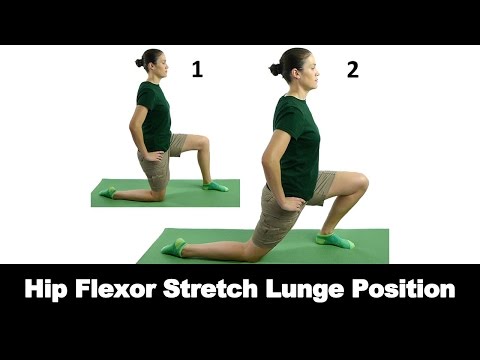
- 01Kneeling Hip Flexor StretchHold 45s · 2x each side
- 02Figure-4 Glute StretchHold 45s · 2x each side
- 03Single Knee-to-ChestHold 30s · 3x each side
- 01Glute Bridge3 sets of 12
- 02Clamshell3 sets of 15 each side
- 03Side-Lying Hip Abduction3 sets of 12 each side
- 04Standing Hip Extension3 sets of 12 each side
- Move most days. Walking, cycling and pool work all count
- Strength train two or three times a week. This is the treatment, not an add-on
- Keep the range you have. Losing internal rotation is what makes daily tasks hard
- Rest it because it aches. An arthritic hip stiffens and weakens fast
- Only do cardio. Strength is what changes how it feels
- Assume replacement is the only path. Most people improve substantially with loading
- The classic sign is grabbing the front of your hip with a C shape between thumb and fingers
- Deep squatting, sitting low, or pulling the knee to the chest pinches rather than aches
- Younger and active. Common in athletes, lifters and dancers
- Sitting for long periods is uncomfortable
- 01Kneeling Hip Flexor StretchHold 45s · 2x each side
- 02Figure-4 Glute StretchHold 30s · 2x each side, stop short of the pinch
- 01Glute Bridge3 sets of 12
- 02Clamshell3 sets of 15 each side
- 03Dead Bug3 sets of 8 each side
- 04Side-Lying Hip Abduction3 sets of 12 each side
- Work the range that does not pinch, and build strength inside it
- Raise your squat stance and reduce depth for a while
- Build glute and deep core strength. That changes how the hip sits in the socket
- Stretch into the pinch. Forcing the end range is exactly what irritates it
- Keep doing deep squats and long low sitting
- Assume you need surgery. Most people respond well to a good loading program first
- It happened in a moment, usually a sprint, a kick, or a fast change of direction
- Lifting the knee against resistance reproduces it
- Tender to press in the crease at the front of the hip
- No groin pain with rotation, and no stiffness in the morning
- 01Kneeling Hip Flexor StretchHold 45s · 2x each side
- 02Tall-Kneeling Quad StretchHold 45s · 2x each side
- 03Single Knee-to-ChestHold 30s · 3x each side
- 01Glute Bridge3 sets of 12
- 02Dead Bug3 sets of 8 each side
- 03Standing Hip Extension3 sets of 12 each side
- 04Bird-Dog3 sets of 8 each side
- Rest from sprinting and kicking for two to three weeks, then rebuild
- Start gentle stretching after the first few days, not on day one
- Return to sprinting gradually with build-ups rather than straight to full pace
- Stretch hard in the first 48 hours
- Test it by sprinting to see if it still hurts
- Rush back. Re-strains are extremely common in this muscle
- Squeezing a ball between your knees reproduces the pain
- Common in soccer, hockey and any cutting or kicking sport
- Tender along the inner thigh close to the pubic bone
- Worse with sudden direction changes
- 01Figure-4 Glute StretchHold 45s · 2x each side
- 02Single Knee-to-ChestHold 30s · 3x each side
- 03Kneeling Hip Flexor StretchHold 45s · 2x each side
- 01Glute Bridge3 sets of 12
- 02Clamshell3 sets of 15 each side
- 03Dead Bug3 sets of 8 each side
- 04Side-Lying Hip Abduction3 sets of 12 each side
- Build adductor strength deliberately. Isometric squeezes early, then progressive loading
- Return to cutting sports gradually
- Get long-standing groin pain assessed. Several things overlap in this area
- Stretch aggressively in the first week
- Go back to full sport as soon as walking is pain-free
- Ignore groin pain lasting months. That deserves imaging
The C-sign. Ask where it hurts without using words. If you cup the front of your hip with a C between thumb and fingers, that is a strong sign of a true hip joint problem.
The sock test. Can you put on socks and shoes as easily on that side? Losing that is one of the earliest signs of hip arthritis.
The squeeze test. Squeeze a rolled towel between your knees. Pain in the inner thigh points at the adductors rather than the joint.
- Keep moving. Walking, cycling and pool work. A stiff hip gets stiffer with rest.
- Sit higher. Low soft chairs and deep car seats put the hip in its most provocative position.
- Do not stretch into a pinch. If it pinches at the front, forcing it deeper makes it worse. Work in the clean range.
- Strengthen the glutes. Bridges and clamshells three times a week. This is the treatment for most of what is here.
- Give it eight to twelve weeks. Hip programs are slower than people expect, and week three feels like nothing is happening.
Groin pain with a fever, an inability to bear weight, pain after a fall in anyone over 60, or night pain that is severe and unrelenting. Hip fractures and stress fractures can present quietly.
The Outside of the Hip
This is what most people mean when they say hip pain, and it is almost never the hip joint. The joint lives deep in the groin. Out here you are dealing with tendons, a bursa, and occasionally a nerve. The good news is that the most common one has a very recognizable signature.
Narrow It Down
The giveaway question: can you lie on that side at night? If not, you are almost certainly looking at the first card below.
- You cannot lie on that side at night. This is the single most recognizable feature
- Pressing the bony point on the side of the hip reproduces it exactly
- Worse climbing stairs, standing on one leg, or after standing a while
- More common in women over 40, and in runners who ramped up quickly
- 01Figure-4 Glute StretchHold 45s · 2x each side
- 02Kneeling Hip Flexor StretchHold 45s · 2x each side
- 01Side-Lying Hip Abduction3 sets of 12 each side
- 02Clamshell3 sets of 15 each side
- 03Glute Bridge3 sets of 12
- 04Standing Hip Extension3 sets of 12 each side
- Sleep with a pillow between your knees, and avoid lying on that side
- Load the glutes progressively. This is a tendon problem and tendons need work
- Stand evenly on both feet instead of hanging on one hip
- Do the classic standing IT band stretch where you cross the leg over. That compresses the exact tendon that hurts
- Foam roll directly on the bony point
- Sit cross-legged or with knees together and feet apart, which also compresses it
- Sharper and more constant than a tendon ache
- It often followed a fall directly onto the hip, or a sudden spike in activity
- Very tender to even light pressure
- Can throb at rest
- 01Figure-4 Glute StretchHold 30s · 2x each side
- 02Kneeling Hip Flexor StretchHold 45s · 2x each side
- 01Clamshell3 sets of 15 each side · start here
- 02Glute Bridge3 sets of 12
- 03Side-Lying Hip Abduction2 sets of 12 each side, once the sharpness settles
- Calm it first with gentle work, then progress to loading
- Ice for 10 to 15 minutes after activity while it is sharp
- Pillow between the knees at night
- Push into sharp pain
- Compress it with crossed-leg stretches or side-lying on it
- Stay on the calming phase forever. It has to progress to strengthening
- The discomfort runs in a band down the outside of the thigh rather than sitting on one point
- A snapping or popping over the bony point when you walk or lift the leg
- Common in runners and cyclists after a volume increase
- Often coexists with weak hip abductors
- 01Figure-4 Glute StretchHold 45s · 2x each side
- 02Pigeon StretchHold 45s · 2x each side
- 03Kneeling Hip Flexor StretchHold 45s · 2x each side
- 01Side-Lying Hip Abduction3 sets of 12 each side
- 02Clamshell3 sets of 15 each side
- 03Glute Bridge3 sets of 12
- 04Bird-Dog3 sets of 8 each side
- Foam roll the muscle of the outer thigh, above and away from the bony point
- Cut running volume about 30 percent for two weeks
- Build hip abductor strength. Weak hips are the usual driver
- Roll directly on the bony point on the side of the hip
- Chase it with stretching alone
- Keep increasing mileage while it is flaring
- Burning or numbness rather than an ache, in a patch on the outer thigh
- Tight belts, waistbands, tool belts or a recent weight change preceded it
- Worse standing or walking, better sitting
- No weakness, and the hip itself moves normally
- 01Kneeling Hip Flexor StretchHold 45s · 2x each side
- 02Single Knee-to-ChestHold 30s · 3x each side
- 01Glute Bridge3 sets of 12
- 02Dead Bug3 sets of 8 each side
- 03Clamshell3 sets of 15 each side
- Loosen or remove tight belts and waistbands. That alone resolves many cases
- Address weight change if that is a factor
- Get it confirmed, because the burning pattern is distinctive and easily mistaken for a disc problem
- Keep wearing the tight belt or tool belt
- Treat it as a hip joint problem
- Ignore it if weakness appears. That means it is something else
The side-sleeping test. Being unable to lie on that side is the hallmark of gluteal tendinopathy. It is the most useful single question for the outside of the hip.
The one-finger test. If you can press one finger on the bony point and reproduce it exactly, it is the tendon or bursa there. If it is a broad band down the thigh, think IT band.
Burning or aching? Burning and numbness on a patch of outer thigh is a nerve, not the joint or tendon, and it is usually a compressed belt line.
- Pillow between the knees. Every night. It stops the top leg dropping across and compressing the tendon.
- Stop crossing your legs. Sitting cross-legged and standing hanging on one hip both compress the tendon.
- Skip the crossover IT band stretch. The standing version where you cross one leg behind the other is the worst thing for this.
- Load the glutes. Side-lying abduction and clamshells, three times a week. This is the actual fix.
- Give it twelve weeks. Gluteal tendinopathy is slow, and it responds to loading rather than rest.
Pain after a fall in anyone over 60, an inability to bear weight, or severe unrelenting night pain. Also get burning outer-thigh pain checked if any weakness develops.
The Buttock and Back of the Hip
Buttock pain is where the hip and the low back overlap, so the first job is working out which one you are dealing with. One question does most of the sorting, and getting it wrong is why a lot of people stretch their piriformis for months without improvement.
Narrow It Down
Start here: does the pain travel below the knee? If yes, treat the back. If no, it is probably the hip or the SI joint.
- The pain goes below the knee, or there is numbness and tingling in the leg or foot
- Coughing, sneezing or straining makes it worse
- Sitting is often the worst position
- There may be low back pain too, though not always
- 01Sciatic Nerve Glide10 reps · 2 to 3x daily
- 02Single Knee-to-ChestHold 30s · 3x each side
- 03Figure-4 Glute StretchHold 45s · 2x each side
- 01Dead Bug3 sets of 8 each side
- 02Bird-Dog3 sets of 8 each side
- 03Glute Bridge3 sets of 12
- Treat the low back. Chasing the buttock with hip stretches will not resolve this
- Use nerve glides rather than aggressive stretching
- Keep walking. Movement usually helps more than bed rest
- Force hard hamstring or piriformis stretches. They tension an already irritated nerve
- Ignore progressive weakness, foot drop, or numbness in the saddle area. That is urgent
- Sit for long stretches without a break
- Deep buttock pain that is worse the longer you sit, especially on a hard surface or a wallet
- Tender when you press deep into the middle of the buttock
- It may refer down the back of the thigh but usually not past the knee
- Better when you get up and move
- 01Figure-4 Glute StretchHold 45s · 2x each side
- 02Pigeon StretchHold 45s · 2x each side
- 03Single Knee-to-ChestHold 30s · 3x each side
- 01Glute Bridge3 sets of 12
- 02Clamshell3 sets of 15 each side
- 03Side-Lying Hip Abduction3 sets of 12 each side
- 04Bird-Dog3 sets of 8 each side
- Break up sitting every 30 to 45 minutes
- Take the wallet out of your back pocket. Genuinely
- Strengthen the glutes. A weak glute makes the deep rotators overwork
- Sit on a hard surface for hours
- Only stretch it. Relief lasts about twenty minutes without strength work
- Dig into it with a lacrosse ball for ten minutes. Brief and gentle is enough
- You can point to it with one finger, right on that dimple
- Rolling over in bed, standing from sitting, or single-leg standing aggravates it
- Often follows pregnancy, a fall onto the buttock, or a lot of asymmetric loading
- Rarely travels below the knee
- 01Single Knee-to-ChestHold 30s · 3x each side
- 02Figure-4 Glute StretchHold 45s · 2x each side
- 03Kneeling Hip Flexor StretchHold 45s · 2x each side
- 01Glute Bridge3 sets of 12
- 02Bird-Dog3 sets of 8 each side
- 03Dead Bug3 sets of 8 each side
- 04Clamshell3 sets of 15 each side
- Load both sides evenly. Stop standing hanging on one hip
- Build glute and trunk control. Stability is the goal here, not more range
- Hands-on care often helps this one substantially
- Repeatedly stretch or crack it yourself for temporary relief
- Do heavy single-leg work while it is irritable
- Sleep without a pillow between the knees if side-lying hurts
- Pain exactly on the sit bone, worst when sitting on a hard chair
- Worse running uphill, doing lunges, or stretching the hamstring
- Common in runners, sprinters and people who ramped up hill work
- A deep, localized ache rather than radiating pain
- 01Figure-4 Glute StretchHold 45s · 2x each side
- 02Single Knee-to-ChestHold 30s · 3x each side
- 01Glute Bridge3 sets of 12
- 02Standing Hip Extension3 sets of 12 each side
- 03Bird-Dog3 sets of 8 each side
- 04Side-Lying Hip Abduction3 sets of 12 each side
- Load the hamstring progressively. Bridges first, then longer-lever work
- Use a cushion when sitting, and avoid sitting on hard edges
- Cut hill running and deep lunges for three to four weeks
- Stretch the hamstring hard. Compression at the sit bone is exactly what irritates this tendon
- Sit on hard chairs for long periods
- Expect a quick resolution. This one is notoriously slow, often three months
The below-the-knee question. Pain, numbness or tingling that travels past the knee points at the low back and a nerve, not the hip. That changes the entire plan.
The one-finger test. If you can put one finger right on the dimple at the top of the buttock, think SI joint. If you have to press deep into the middle of the buttock, think piriformis. If it is on the sit bone, think hamstring tendon.
The sitting test. Worse the longer you sit, and better when you stand, is typical of deep gluteal pain. Pain exactly on the sit bone when sitting on something hard points at the hamstring tendon.
- Break up sitting. Every 30 to 45 minutes. This is the highest-value change for almost everything in this zone.
- Wallet out of the back pocket. Sounds trivial, and it is not.
- Use a cushion. Especially if the sore spot is the sit bone.
- Go easy on stretching. Both sciatica and high hamstring pain get worse with aggressive stretching. Strengthen instead.
- Walk. Almost everything in this region does better with regular walking than with rest.
Numbness in the saddle area, loss of bladder or bowel control, or progressive weakness such as a foot that drags. That combination is a medical emergency. Also get seen for weakness that is worsening rather than pain alone.
Deep In The Joint, Or Waking You Up
When the pain is deep in the groin, worse at night, and getting steadily worse rather than fluctuating, the list changes. This is the group where a real diagnosis matters most before you start a program, because two of these need imaging rather than exercise.
Narrow It Down
The pattern that matters: steadily worsening, night pain, and pain on weight-bearing. That combination earns an exam.
- You are over 60 and fell, even a minor fall, and now the groin hurts on weight-bearing
- You are a runner who ramped mileage sharply, or an athlete with low energy availability or irregular periods
- Pain with hopping or single-leg standing, and night pain
- The leg may look shortened or turned outward after a fall
- Get imaged before you do anything else. Stress fractures of the femoral neck can progress to a full break
- Stop weight-bearing activity until it has been cleared
- Mention the mileage increase, or the fall, explicitly
- Push through it, run on it, or try to stretch it
- Assume a normal X-ray rules out a stress fracture. Early ones often need an MRI
- Wait weeks to see if it settles
- Night pain, and difficulty finding a comfortable position
- Stiffness that is now limiting daily tasks like socks, shoes and car seats
- Turning the leg inward is clearly restricted compared with the other side
- A limp that is becoming more consistent
- 01Single Knee-to-ChestHold 30s · 3x each side
- 02Figure-4 Glute StretchHold 30s · 2x each side
- 03Kneeling Hip Flexor StretchHold 45s · 2x each side
- 01Glute Bridge3 sets of 12
- 02Clamshell3 sets of 15 each side
- 03Side-Lying Hip Abduction3 sets of 12 each side
- 04Standing Hip Extension3 sets of 12 each side
- Keep loading it. Strength consistently improves pain and function even in advanced arthritis
- Use a stick or pole in the opposite hand if you are limping. It offloads the joint substantially
- Have the conversation about replacement if night pain and function are the issue. Timing is a choice, not a failure
- Stop moving. Deconditioning makes everything about this worse
- Rely only on medication
- Assume exercise is pointless at this stage. It is not
- Clicking, catching or a sense of giving way deep in the joint
- Pivoting, twisting or getting out of a car reproduces it
- Often occurs alongside hip impingement in younger, active people
- Pain can linger for hours after activity
- 01Kneeling Hip Flexor StretchHold 45s · 2x each side
- 02Figure-4 Glute StretchHold 30s · 2x each side, stop short of pinching
- 01Glute Bridge3 sets of 12
- 02Clamshell3 sets of 15 each side
- 03Dead Bug3 sets of 8 each side
- 04Side-Lying Hip Abduction3 sets of 12 each side
- Build strength in the pain-free range first. Many labral tears settle without surgery
- Avoid end-range positions that catch
- Get imaging if mechanical symptoms persist beyond a few months of good rehab
- Stretch into the catch
- Keep doing deep squats, deep lunges and aggressive pivoting
- Rush to surgery. A trial of proper loading comes first for most people
- A history of long-term steroid use, heavy alcohol use, sickle cell disease, or previous hip trauma
- Groin pain that has been steadily worsening over weeks to months
- Night pain and increasing stiffness
- Often between 30 and 50, which is young for arthritis
- 01Single Knee-to-ChestHold 30s · 3x each side
- 02Figure-4 Glute StretchHold 30s · 2x each side
- 01Glute Bridge3 sets of 12
- 02Clamshell3 sets of 15 each side
- Get an MRI. X-rays are normal in the early stages and early diagnosis genuinely changes the outcome
- Mention any steroid or alcohol history to whoever assesses you
- Reduce weight-bearing load until it is diagnosed
- Assume young age rules out a serious hip problem
- Keep running on it
- Wait for it to show up on X-ray
The hop test. If you can, hop once on that leg. Sharp groin pain on landing is a stress fracture sign and means stop and get imaged, not push on.
The rotation check. Lying down, roll the relaxed leg in and out. Clearly less inward rotation than the other side is one of the earliest signs of hip joint disease.
The trend question. Is it steadily getting worse week over week, or does it fluctuate? Steady progression with night pain deserves imaging.
- Use a stick in the opposite hand. If you are limping, this offloads the joint more than most people realize.
- Keep moving within comfort. Pool work and cycling let you keep conditioning without pounding the joint.
- Strength still matters. Even in advanced arthritis, glute strength improves pain and function.
- Get the imaging. This is the one zone where waiting it out can genuinely cost you.
- Sort out sleep. Pillow between the knees, and try a semi-reclined position.
You cannot bear weight, you fell and you are over 60, the leg looks shortened or turned out, or you have a fever with severe hip pain. Also get seen promptly for a runner with groin pain on hopping, which can be a femoral neck stress fracture.
Stretches &
Exercises
Every movement referenced above, in one place, with a video demo. Nothing here should reproduce sharp pain. Work in the range that feels clean and let it expand week by week. Two rules govern all of it, and they are spelled out right after this section.
Stretches and mobility
Daily is fine. Never stretch into a pinch at the front of the hip.
 Watch demo
 Watch demo
 Watch demo
 Watch demo
 Watch demo
 Watch demo
Strengthening
Every other day. Bodyweight is plenty to start, and slow control beats speed.
 Watch demo
 Watch demo
 Watch demo
 Watch demo
 Watch demo
 Watch demo
How To Know If
You’re Doing Too Much
These two rules apply to every program on this page, wherever your pain is. They are the same ones I give patients in the office, and they replace the guesswork about whether to push through something.
Some discomfort during these exercises is normal and even useful. Pain above about a 3 out of 10 is not. If an exercise pushes past that, reduce the range, the weight, or the number of reps.
You should be back to your normal baseline within 24 hours. If it is more sore the next morning, you did too much. Cut the volume roughly in half and build back from there.
Signs You Should
Skip the Exercises
Most hip pain does well with sensible load management and progressive strengthening. These are the exceptions, and two of them need imaging rather than exercise.
Hip Pain
Questions
Usually not. True hip joint problems are felt in the groin, not on the outside. Pain on the bony point at the side of the hip is almost always gluteal tendinopathy, a tendon problem, and the giveaway is being unable to lie on that side at night. This distinction matters because the two need completely different treatment.
That is the signature of gluteal tendinopathy, sometimes called greater trochanteric pain syndrome. Lying on the side compresses the tendon against the bone. Sleep on the other side with a pillow between your knees, and avoid the standing crossover IT band stretch, which compresses the same tendon. The actual fix is progressive glute strengthening.
Groin pain is the classic location for true hip joint problems, which is why people often grab the front of the hip in a C shape to describe it. In someone over 50 with morning stiffness and difficulty putting on socks and shoes, that suggests hip arthritis. In a younger active person with a sharp pinch at the end of the range, it suggests femoroacetabular impingement.
The question that sorts it out is whether the pain travels below the knee. If pain, numbness or tingling goes past the knee, that points to a nerve from the low back and the back is what needs treating. Deep buttock pain that gets worse the longer you sit and does not go past the knee is more likely piriformis or deep gluteal pain.
It depends entirely on the diagnosis, which is why this page separates them. Gluteal tendinopathy gets worse with the standing crossover stretch. Hip impingement gets worse when you force the pinching end range. High hamstring tendinopathy gets worse with hamstring stretching. Meanwhile an arthritic hip genuinely benefits from daily range of motion work. Getting this backwards is a common reason hip pain drags on.
Almost certainly proximal hamstring tendinopathy, where the hamstring attaches to the sit bone. It is worst sitting on hard surfaces, and worse with hill running and deep lunges. It responds to progressive loading and gets worse with stretching, because stretching compresses the tendon against the bone. Use a cushion and expect it to take about three months.
Get seen immediately if you cannot bear weight, if you fell and are over 60, if the leg looks shortened or turned outward, or if you have a fever with severe hip pain. Numbness in the saddle area or loss of bladder or bowel control with buttock pain is a medical emergency. Runners with groin pain when hopping should be assessed for a femoral neck stress fracture before continuing to train.
Gluteal tendinopathy typically takes about twelve weeks of consistent loading. Hip impingement and labral irritation usually need eight to twelve weeks of a good strength program before deciding anything further. High hamstring tendinopathy is often three months. Arthritis improves with strength work over six to twelve weeks and then needs maintaining. Week three usually feels like nothing is happening, which is normal.
Yes. Hip pain is closely tied to the low back, pelvis and the way you load the leg, and telling hip pain apart from referred back pain is a large part of the exam. Dr. Loewenstein assesses the hip alongside the back and pelvis, uses hands-on care to restore motion, and builds the loading program that resolves it. Treatment starts on the first visit at the UTC San Diego office.
Find Out What’s
Actually Going On
Narrowing it down by location gets you most of the way there. A hands-on exam gets you the rest of the way, and treatment starts on visit one.